Period Blood Clots: What Is Normal and When to Worry
Clots smaller than a quarter (about 2.5 cm), passed occasionally on your heaviest days, are normal. Regularly passing clots the size of a quarter or larger, soaking through a pad or tampon every hour, or bleeding more than 7 days are signs of heavy menstrual bleeding that deserve a medical review.
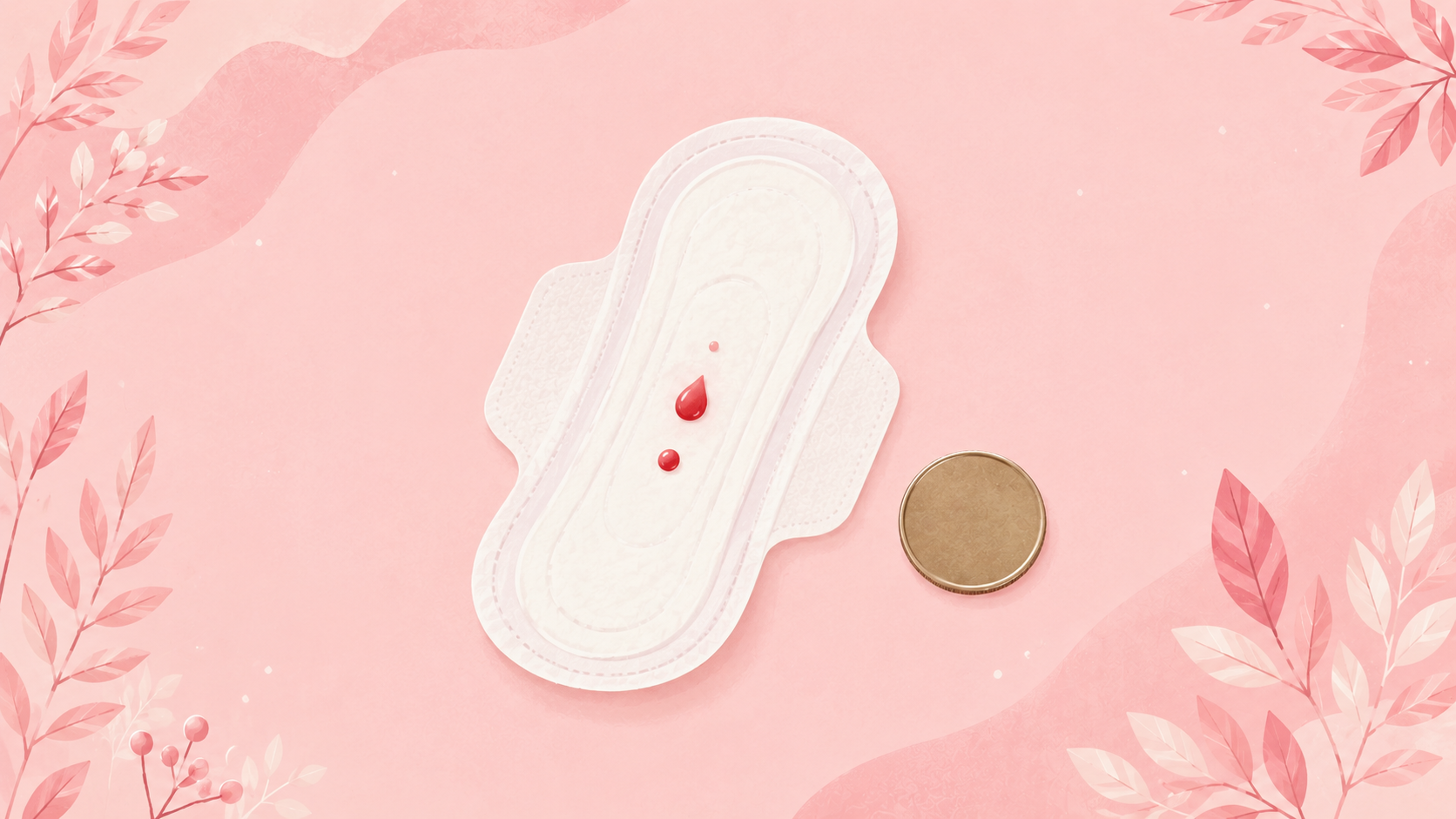
Seeing clots in your period blood can be unsettling, but most of the time it is your body doing exactly what it is designed to do. The useful question is not "are clots bad?" - it is "how big, how often, and what else is going on?"
Why period clots form at all
Menstrual blood is a mix of blood and shed uterine lining. Your body releases natural anticoagulants to keep that flow thin, but on heavy days blood can leave faster than the anticoagulants can work, or it pools briefly in the uterus or vagina. Pooled blood does what blood does: it clots.
That is why clots show up mostly on your heaviest one or two days, often first thing in the morning after blood has collected overnight.
What normal clots look like
- Smaller than a quarter (about 2.5 cm / 1 inch)
- Occasional - a few on heavy days, not constant
- Dark red to deep crimson, sometimes almost purple; older blood can look brown (see our period blood color guide)
- Jelly-like texture - that is fibrin plus lining, and it is expected
If that describes your period, clots alone are not a problem.
When clots point to heavy bleeding
Clinicians treat clots as a flag for heavy menstrual bleeding (menorrhagia) when they come with volume signs. Talk to a clinician if you regularly notice:
- Clots the size of a quarter or larger, several times per period
- Soaking through a pad or tampon every hour for several hours in a row
- Needing to double up on protection or change overnight
- Bleeding longer than 7 days
- Fatigue, dizziness, breathlessness, or paleness - possible signs of iron deficiency from blood loss
That last point matters more than most people realize: heavy periods are one of the most common causes of iron deficiency in women. We cover the full picture in heavy periods and iron deficiency.
What causes large or frequent clots
Heavy flow with big clots usually has an identifiable cause:
- Uterine fibroids - benign growths that enlarge the bleeding surface; see our fibroids guide
- Adenomyosis - uterine lining tissue growing into the muscle wall; covered in our adenomyosis explainer
- Endometrial polyps
- Hormonal imbalance - anovulatory cycles (common in perimenopause and PCOS) let the lining build up thicker than usual
- Thyroid problems - an underactive thyroid can heavy-up periods
- Bleeding disorders such as von Willebrand disease, often present since the very first period
- Copper IUDs, which can increase flow
- Early pregnancy loss - clots plus a late period and cramping deserve a pregnancy test and a call to your clinician
What a doctor will actually do
Expect a straightforward workup: a history of your cycles (this is where tracking pays off), a blood count and ferritin to check for iron deficiency, possibly thyroid tests, and often a pelvic ultrasound to look for fibroids and polyps. Treatments range from tranexamic acid and NSAIDs during your period to hormonal options (the levonorgestrel IUD is particularly effective) and procedures for structural causes.
How Femora helps
"Regularly" and "several times per period" are the load-bearing words in every guideline, and memory is a bad instrument for them. Femora lets you log flow intensity daily and add notes about clots, so after two or three cycles you have an objective record: which days are heaviest, how long bleeding really lasts, whether it is trending worse. That record turns a vague "my periods feel heavy" into data a clinician can act on in one visit.
The free Period Calculator predicts when your next period is due so heavy days do not catch you out, and if something feels off you can chat with a health expert right in the app.
The bigger picture
Clots are usually just physics - pooled blood clots. Size, frequency, and company are what matter: quarter-sized or bigger, happening every cycle, or arriving with hourly soak-through and exhaustion is a treatable medical issue, not a personal quirk to endure.
Ready to get a clear picture of your flow? Download Femora.
Sources
- Period Blood Clots: Should You Be Concerned? - Cleveland Clinic.
- Menorrhagia (Heavy Menstrual Bleeding) - Cleveland Clinic.
- Heavy periods - NHS.