Uterine Fibroids: Symptoms and 2026 Treatment Options
Uterine fibroids are non-cancerous muscle growths in or on the uterus, and most women develop at least one by age 50 - often with no symptoms. When they do cause problems, the usual signs are heavy or prolonged periods (a common cause of iron-deficiency anemia), pelvic pressure, frequent urination, and sometimes fertility issues. The big shift in 2026 is the wide menu of uterus-preserving treatments - hormonal IUD, tranexamic acid, oral GnRH antagonist combinations, uterine artery embolization, radiofrequency ablation, and myomectomy - so hysterectomy is now one option among many rather than the default. Track your bleeding for two to three cycles, ask for a pelvic ultrasound, and ask about uterus-preserving options first if keeping your uterus matters to you.
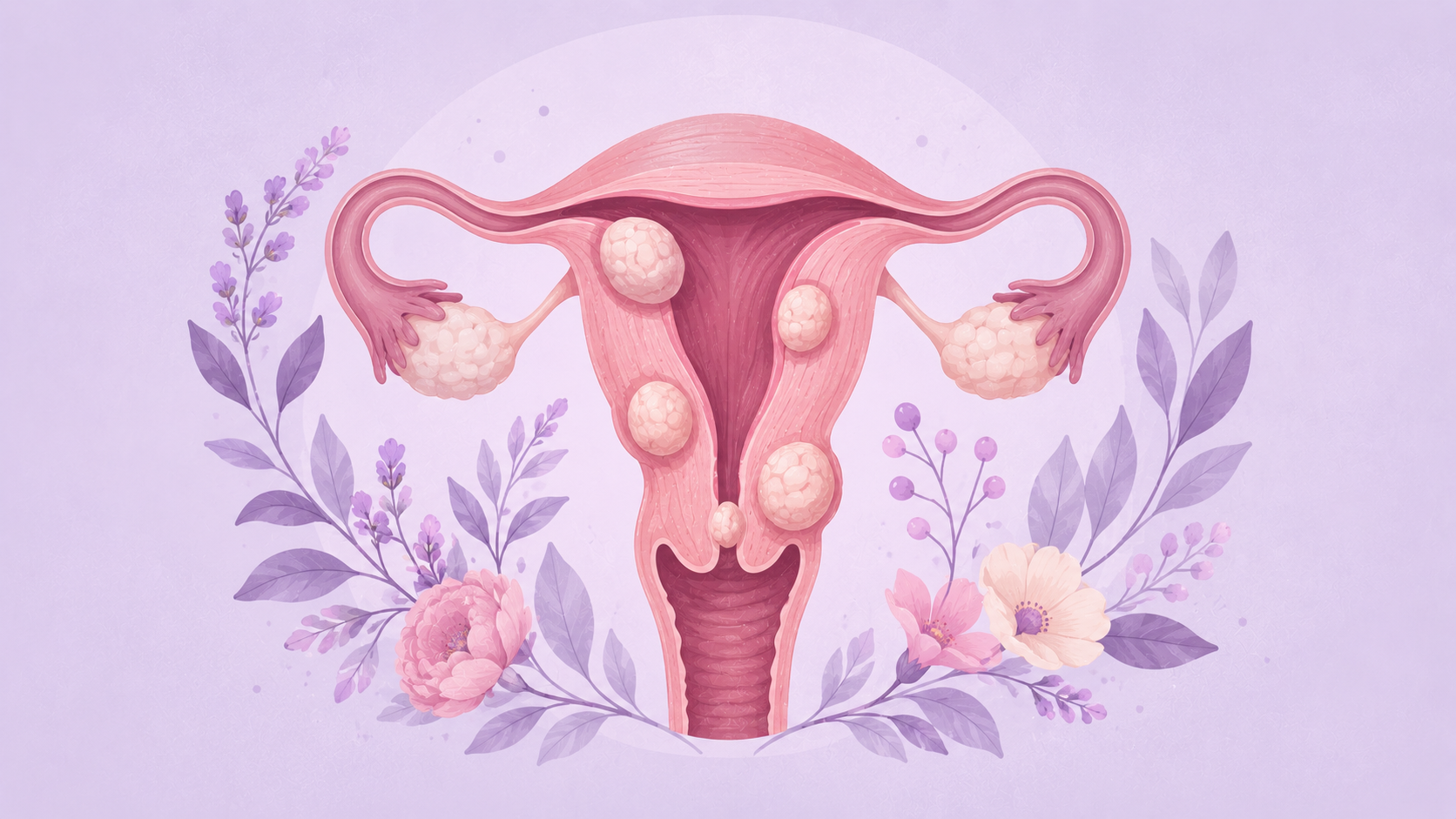
Uterine fibroids are the most common growth a woman can have in her reproductive years, and one of the most misunderstood. They are almost always benign, often cause no symptoms at all, and yet they are the leading reason women are offered a hysterectomy.
By age 50, a large majority of women will have had at least one fibroid - many without ever knowing. For others, fibroids mean heavy bleeding, pelvic pressure, and a real dent in quality of life. The good news in 2026 is how much the treatment menu has widened: most women now have several uterus-preserving options long before surgery to remove the uterus is on the table.
If you have been told you have fibroids - or you have heavy, pressured periods and wonder why - here is the plain-English picture.
What uterine fibroids actually are
Fibroids (medically, leiomyomas or myomas) are non-cancerous growths of muscle and fibrous tissue in or on the wall of the uterus. They can be as small as a seed or as large as a grapefruit, and you can have one or many.
Their behavior depends a lot on where they sit:
- Submucosal - bulge into the uterine cavity. The most likely to cause heavy bleeding and fertility problems, even when small.
- Intramural - grow within the muscular wall. The most common type; can cause bleeding and bulk symptoms as they enlarge.
- Subserosal - grow on the outer surface. More likely to cause pressure on the bladder or bowel than heavy bleeding.
- Pedunculated - hang from a stalk, inside or outside the uterus.
Fibroids are fueled by estrogen and progesterone, which is why they tend to grow during the reproductive years and often shrink after menopause when those hormones fall.
The problem they cause
Many fibroids are silent. When they do cause symptoms, the common ones are:
- Heavy or prolonged periods, sometimes with clots - heavy enough to cause iron deficiency and anemia
- Pelvic pressure or fullness, a feeling of heaviness low in the abdomen
- Frequent urination or trouble emptying the bladder (pressure on the bladder)
- Constipation or back pain (pressure on the bowel or spine)
- Pain during sex
- In some cases, difficulty conceiving or pregnancy complications, especially with submucosal fibroids
The 2026 treatment menu
The single biggest shift in fibroid care is the move away from "the only fix is a hysterectomy." As of 2026, treatment is matched to your symptoms, the size and location of the fibroids, and whether you want future pregnancies. The main options:
Watchful waiting
If fibroids are small and not bothering you, monitoring is a legitimate choice. Many never need treatment, and they often shrink after menopause.
Medical (no surgery)
- Hormonal IUD - releases progestogen locally and is often first-line for the heavy bleeding, though it does not shrink the fibroids themselves.
- Tranexamic acid - a non-hormonal tablet taken during your period to reduce blood loss.
- Oral GnRH antagonist combinations (such as elagolix or relugolix with add-back hormones) - FDA-approved options that reduce heavy fibroid-related bleeding, typically for a defined period.
- Combined hormonal contraception - can help control bleeding for some women.
Procedures that preserve the uterus
- Uterine artery embolization (UAE) - blocks the blood supply so fibroids shrink. No major incision.
- Radiofrequency ablation - destroys fibroid tissue with heat through a minimally invasive approach.
- MRI-guided focused ultrasound - uses focused sound waves to destroy fibroids without incisions, where available.
- Myomectomy - surgically removes the fibroids while keeping the uterus. The go-to surgical option if you want to preserve fertility, though fibroids can regrow.
Surgery that removes the uterus
- Hysterectomy - the only definitive cure, since fibroids cannot return without a uterus. Appropriate for some women, but now one option among many rather than the default.
The takeaway: if the first thing you are offered is a hysterectomy and you would prefer to keep your uterus, it is reasonable to ask what uterus-preserving options apply to your situation.
Symptoms that mean it is worth checking
See your clinician if you have:
- Periods so heavy you soak a pad or tampon every hour or two, or pass large clots
- Periods lasting longer than seven days
- Ongoing pelvic pressure, bloating, or a noticeably firm lower abdomen
- Urinary frequency or constipation without another explanation
- Fatigue or breathlessness (possible anemia from blood loss)
- Trouble conceiving or recurrent pregnancy loss
Fibroids are usually found with a pelvic exam plus ultrasound; sometimes an MRI or a scope inside the uterus is used to map them precisely.
Fibroids vs adenomyosis vs endometriosis
These three overlap, frequently coexist, and get confused constantly:
- Fibroids - discrete, non-cancerous muscle growths in or on the uterus. Hallmark: heavy bleeding plus pressure or bulk symptoms.
- Adenomyosis - uterine-lining tissue grows into the muscular wall, making the uterus enlarged and "boggy." Hallmark: heavy bleeding plus severe cramps. See our adenomyosis 2026 guide.
- Endometriosis - lining-like tissue grows outside the uterus. Hallmark: cyclical pelvic pain, pain with sex and bowel movements. See our endometriosis 2026 guide.
Imaging is what tells them apart. For a fuller breakdown, see our comparison of PCOS, PMOS, endometriosis, and adenomyosis.
What to do
- Track your bleeding and pressure symptoms for two to three cycles. Record products soaked, clot size, days of bleeding, and any urinary or bowel symptoms.
- Ask for imaging if heavy or pressured periods are affecting your life - a pelvic ultrasound is the usual first step.
- Ask about uterus-preserving options first if keeping your uterus matters to you.
- Raise fertility plans early so your treatment protects them; some options suit future pregnancy better than others.
- Check your iron if bleeding is heavy - fibroids are a common, fixable cause of anemia.
How Femora helps
Fibroid care is driven by how much you actually bleed and how the symptoms affect you - and that is precisely what tracking captures.
With Femora you can:
- Log flow intensity and symptoms daily, turning "heavy periods" into a chart of soaked products and bleeding days that justifies imaging and treatment.
- Track your full cycle with the period calculator and menstrual cycle calculator to see whether your bleeding is genuinely longer or heavier than it should be.
- Spot trends over time, like periods getting heavier month on month, that point toward a fibroid or related cause.
The bigger picture
Fibroids are so common that having one is closer to the norm than the exception - which is exactly why they get under-investigated when they do cause trouble. The real change in 2026 is not a single new drug but a mindset: heavy, pressured periods deserve a proper look, and removing the uterus is a last resort, not a first move. If your periods are running your life, a clear record of them is the fastest route to the right option.
Track your flow, pressure symptoms, and full cycle with Femora. Free on iOS and Android. The clearer your record, the easier it is to get imaging and the treatment that fits your goals.
Sources
- Uterine fibroids - Symptoms and causes - Mayo Clinic, 2024.
- Uterine Fibroids - American College of Obstetricians and Gynecologists (ACOG), 2025.
- Uterine fibroids - Office on Women's Health, U.S. Department of Health & Human Services, 2024.
- Uterine Fibroids: Causes, Symptoms & Treatment - Cleveland Clinic, 2024.
- Uterine Fibroids - Eunice Kennedy Shriver National Institute of Child Health and Human Development (NICHD), 2024.