Period Cramps but No Period? 8 Reasons for Cramps Without Bleeding
Cramps without a period are most often ovulation pain, PMS cramps ahead of a late period, or early pregnancy (implantation). Persistent or severe cramping with no bleeding can also come from ovarian cysts, endometriosis, fibroids, pelvic infection, or digestive causes. If a period is late, test; if pain is severe or one-sided, seek care promptly.
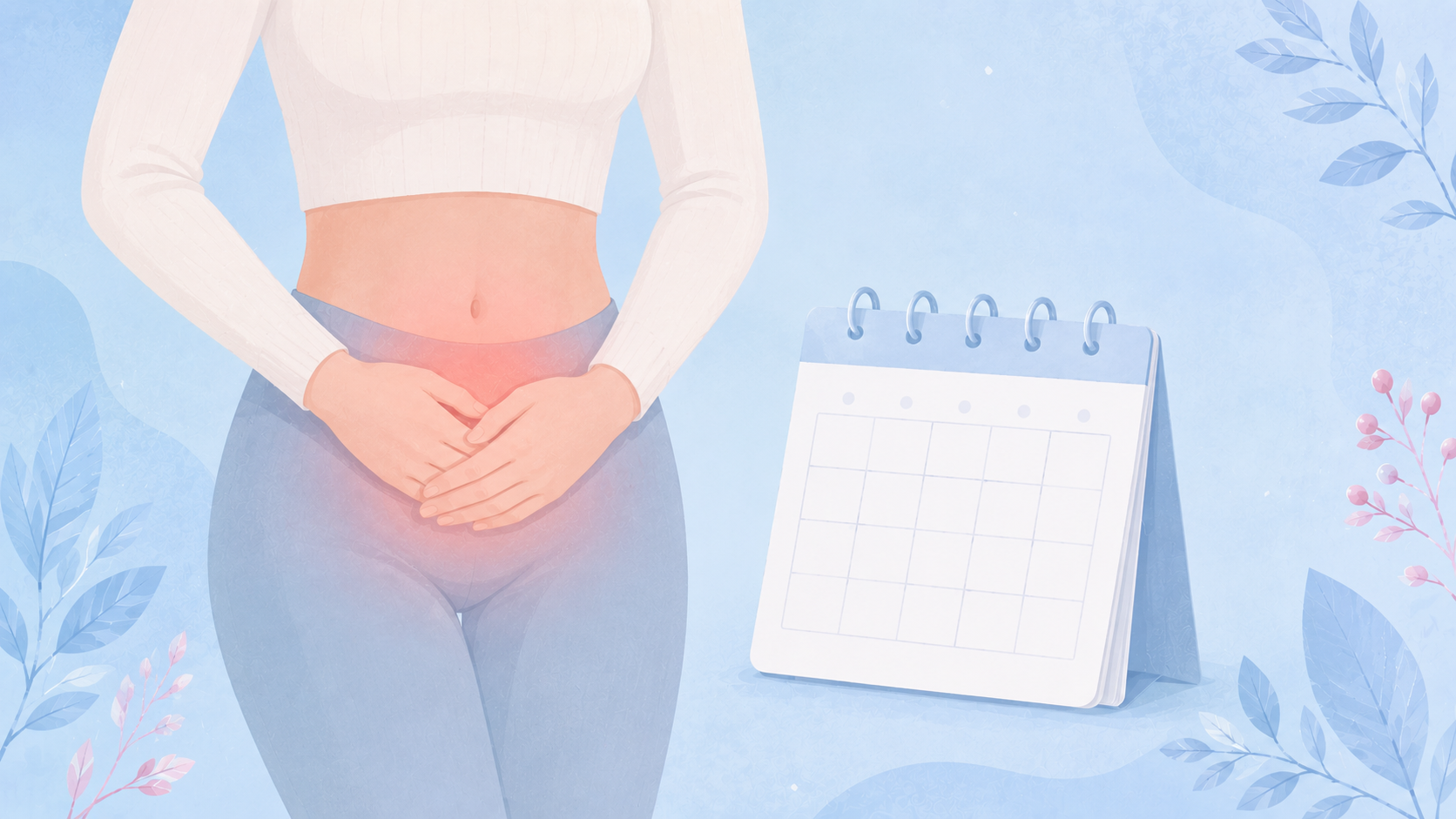
That unmistakable dragging, cramping ache arrives - and then nothing. No period. Cramps without bleeding are common, and the explanation usually falls into one of eight buckets. Timing is your best clue.
1. Ovulation pain (mittelschmerz)
A one-sided twinge or ache around the middle of your cycle, lasting minutes to a day or two, as the follicle stretches and releases an egg. If your "period cramps" land roughly two weeks before your period is due, this is the likely story. Bonus: it is a genuinely useful fertility sign, lining up with egg-white cervical mucus and the peak of the fertile window.
2. Your period is simply late (and PMS came anyway)
The hormone slide that triggers cramps and PMS happens on ovulation's schedule, not the calendar's. If ovulation was delayed - by stress, illness, or travel - the whole back half of your cycle shifts, and cramps can show up days before the delayed bleed. Check where you actually are with the Late Period Calculator, and see why periods run late beyond pregnancy.
3. Early pregnancy
Mild cramping is common around implantation (about 10 to 14 days after conception) and in the early weeks as the uterus adjusts - sometimes with light spotting, often with nothing. Cramps plus a late period equals a pregnancy test; our pregnancy test calculator tells you when the result is trustworthy, and our guide to implantation bleeding vs a period covers the spotting question.
Important: severe, one-sided pain with a positive test (or a late period), especially with shoulder-tip pain, dizziness, or bleeding, can signal an ectopic pregnancy - that is emergency care, immediately.
4. Ovarian cysts
Most cysts are silent and resolve on their own, but they can cause one-sided aching or pressure at any point in the cycle. A cyst that ruptures or twists (torsion) causes sudden, severe one-sided pain, often with nausea - another go-now situation. Recurring cyst pain with irregular cycles is also a PCOS conversation worth having.
5. Endometriosis and adenomyosis
Endometriosis pain does not read the calendar: it can cramp between periods, during sex, or with bowel movements, not just during bleeding. If your cramps-without-period happen alongside periods that are themselves severely painful, read our comparison of normal period pain vs endometriosis pain. Adenomyosis behaves similarly with heavy periods; see the adenomyosis guide.
6. Fibroids
Uterine fibroids can cause cramping, pelvic pressure, and a heavy or full feeling whether or not you are bleeding - typically alongside heavier periods when they do come. Details in our fibroids explainer.
7. Pelvic infection
Pelvic inflammatory disease (PID) - usually from untreated chlamydia or gonorrhea - causes lower abdominal cramping plus some combination of fever, unusual discharge, pain with sex, or spotting. It needs prompt antibiotics to protect fertility. Cramps plus discharge changes or fever = same-week appointment.
8. It is not your uterus
The uterus shares its neighborhood with the bowel and bladder. Constipation, IBS flares, gas, and urinary tract infections all produce cramping that reads as "period-like." If cramps track your digestion (better after a bowel movement, worse with certain foods) more than your cycle, that is your answer - our period poop explainer covers how the cycle stirs the gut too.
How to narrow it down
- Place the cramp in your cycle. Mid-cycle and one-sided points to ovulation; just before a due-but-late period points to a shifted cycle; past a missed period points to a test.
- Test if late. One test from the first missed day settles the biggest branch.
- Note the extras. Fever or discharge → infection. Sudden severe one-sided pain → urgent care. Pain with sex or bowel movements most cycles → endometriosis conversation.
How Femora helps
This whole list is a timing problem, and timing is what a tracker is for. Femora shows you exactly which cycle day you are on and predicts your period and ovulation, so a cramp lands with context: "day 15, probably ovulation" reads very differently from "day 34, period 6 days late." Log cramps with severity in your daily log and patterns emerge in two or three cycles - evidence you can bring to an appointment. The free Menstrual Cycle Calculator gives a quick map of your cycle right now.
The bigger picture
Cramps without a period are usually your cycle running on its own schedule rather than yours - ovulation, a delayed period, or an early pregnancy. The exceptions announce themselves: severity, one-sidedness, fever, or persistence. Know your cycle day, test when late, and escalate the red flags.
Want cramps to come with context? Download Femora.
Sources
- Mittelschmerz: Symptoms and causes - Mayo Clinic.
- Pelvic inflammatory disease (PID) - NHS.
- Ectopic pregnancy - NHS.