Night Sweats During Menopause: Why They Happen and How to Stop Them
Night sweats are hot flashes that happen during sleep, caused by falling estrogen making the brain's temperature center oversensitive. They are extremely common in perimenopause and menopause. A cool bedroom, moisture-wicking bedding, trigger reduction, and (when needed) prescription treatment all help. See a doctor if night sweats come with fever, weight loss, or drenching sweats unrelated to menopause.
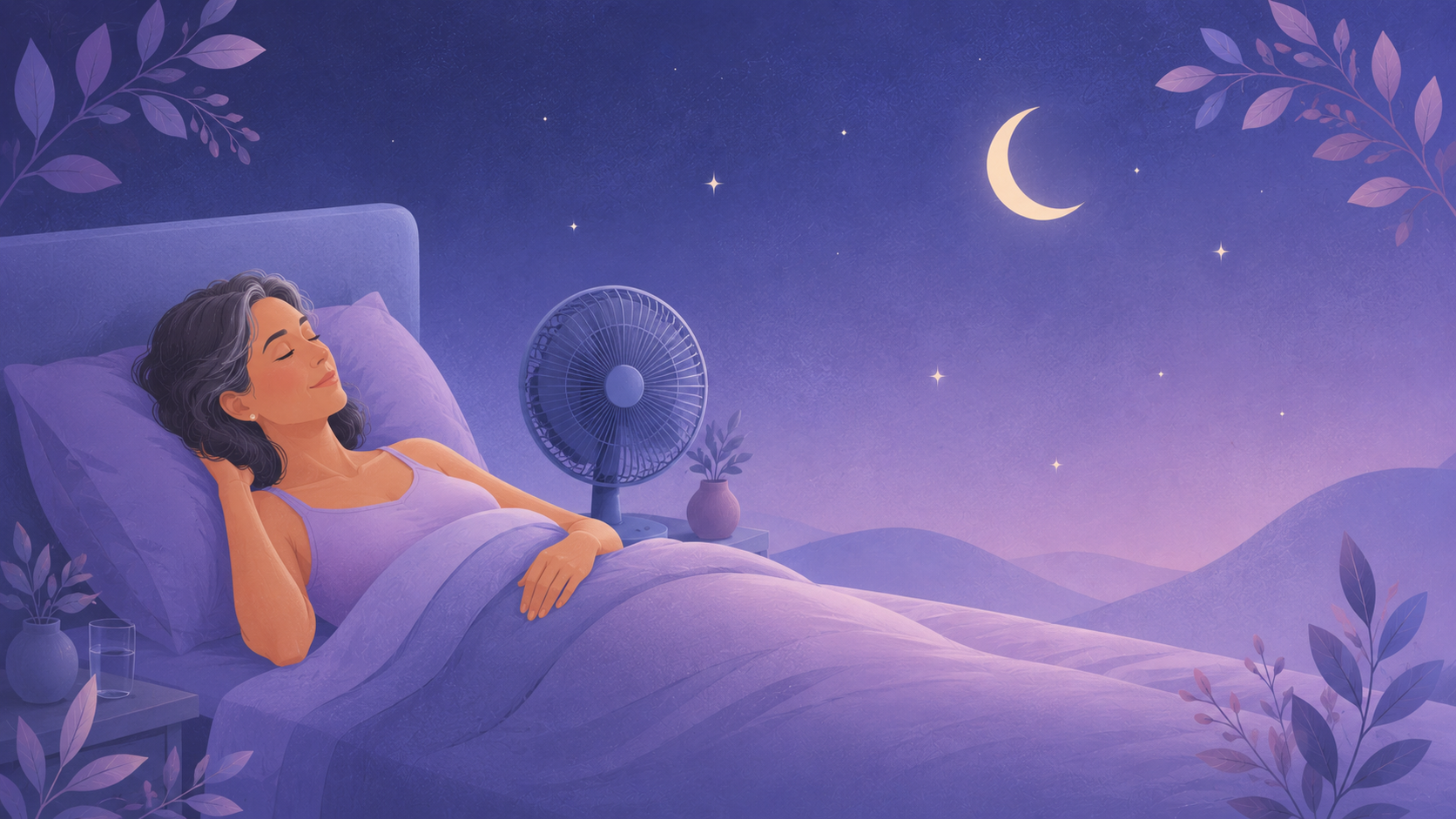
You wake at 3 a.m., throw off the covers, and realize your pajamas are soaked. Menopausal night sweats are one of the most exhausting parts of the transition - not because any single episode is dangerous, but because they shred your sleep night after night. Here is what is happening and what genuinely helps.
Night sweats are hot flashes in the dark
A night sweat is not a separate condition - it is a hot flash that happens while you sleep. The same brain mechanism drives both: as estrogen falls, temperature-regulating KNDy neurons in the hypothalamus become overactive and misread your body as too hot, triggering an unnecessary heat-dump - blood vessels dilate, you flush, and you sweat. Our non-hormonal hot flash treatments guide explains the biology in full.
At night this is worse for a simple reason: it wakes you, and fragmented sleep spills into the next day as fatigue, low mood, and brain fog. That knock-on effect is why night sweats so often feel like the worst menopausal symptom even though a daytime flash and a night sweat are the same event.
Why they can feel relentless
Night sweats cluster with the rest of the vasomotor picture, and like hot flashes overall they can last years - the landmark SWAN study found a median of 7.4 years for vasomotor symptoms (see how long hot flashes last). Stress, a warm bedroom, alcohol in the evening, and being run down all make a given night worse, which is good news: several of those are things you can change.
What actually helps at night
Cool the environment first:
- Keep the bedroom cool (many people aim for around 18°C / 65°F) and use a fan you can reach without getting up.
- Switch to moisture-wicking sleepwear and bedding - breathable cotton or technical fabrics, and layers you can shed.
- Keep a glass of cold water and a spare set of nightclothes within reach so a night sweat is a two-minute interruption, not an hour awake.
Cut the evening triggers:
- Alcohol close to bedtime is one of the most common night-sweat triggers; so are spicy food, caffeine, and hot drinks late in the day. Our hot flash triggers guide covers how to find yours.
- Wind down with a cool, dark, screen-light routine - see menopause and sleep for the full picture.
Treat them medically if they are disrupting your life:
- Prescription non-hormonal drugs taken at night can be ideal - gabapentin is often dosed at bedtime, and the newer brain-targeted drugs (fezolinetant, elinzanetant) reduce vasomotor symptoms including night sweats. Details in our non-hormonal treatments guide.
- Menopausal hormone therapy is highly effective for night sweats for women who are suitable candidates - see hormone therapy in 2026.
- CBT for menopause reduces how bothersome symptoms feel and improves sleep.
When night sweats are not (just) menopause
Menopause is the most common cause of night sweats in midlife women, but not the only one. See a clinician promptly if your night sweats come with:
- Fever, unexplained weight loss, or persistent cough - these need evaluation to rule out infection or other conditions
- Drenching sweats that are new, one-off, or do not fit the menopausal pattern
- Symptoms alongside a possible thyroid problem (racing heart, tremor, weight change), certain medications (some antidepressants, diabetes drugs), or heavy alcohol use
- Night sweats when you are not in the menopause transition at all
A quick check protects against assuming "it's just menopause" when something else is treatable.
How Femora helps
Night sweats are hard to describe to a doctor from memory - "a few times a week" is vague, and a fresh, sleepless morning skews your sense of how bad it really is. Femora lets you log each night sweat and its severity, capture how much sleep it cost you, and note the evening's likely triggers, so patterns emerge and you can measure whether a change is working. Put a number on the overall burden with the menopause symptom score, and keep vasomotor symptoms, sleep, and mood together in menopause mode.
The bigger picture
Menopausal night sweats are hot flashes that ambush you asleep, and their real cost is the wrecked rest that follows. Cool the room, cut the evening triggers, and treat them properly if they are stealing your sleep - because you may be dealing with them for years, and "just endure it" is not the only option.
Ready to get your nights back? Download Femora.
Sources
- Menopause: Symptoms - NHS.
- Night sweats: Causes - Mayo Clinic.
- The 2023 Nonhormone Therapy Position Statement of The North American Menopause Society - The Menopause Society.