What Triggers Hot Flashes? The Foods, Drinks, and Habits to Watch
Common hot flash triggers include alcohol, caffeine, spicy food, hot drinks, warm environments, stress, smoking, and tight or heavy clothing. Triggers are individual - not everyone reacts to all of them - which is why tracking yours is the most useful step. Reducing your specific triggers can cut how often flashes hit, alongside medical treatment if needed.
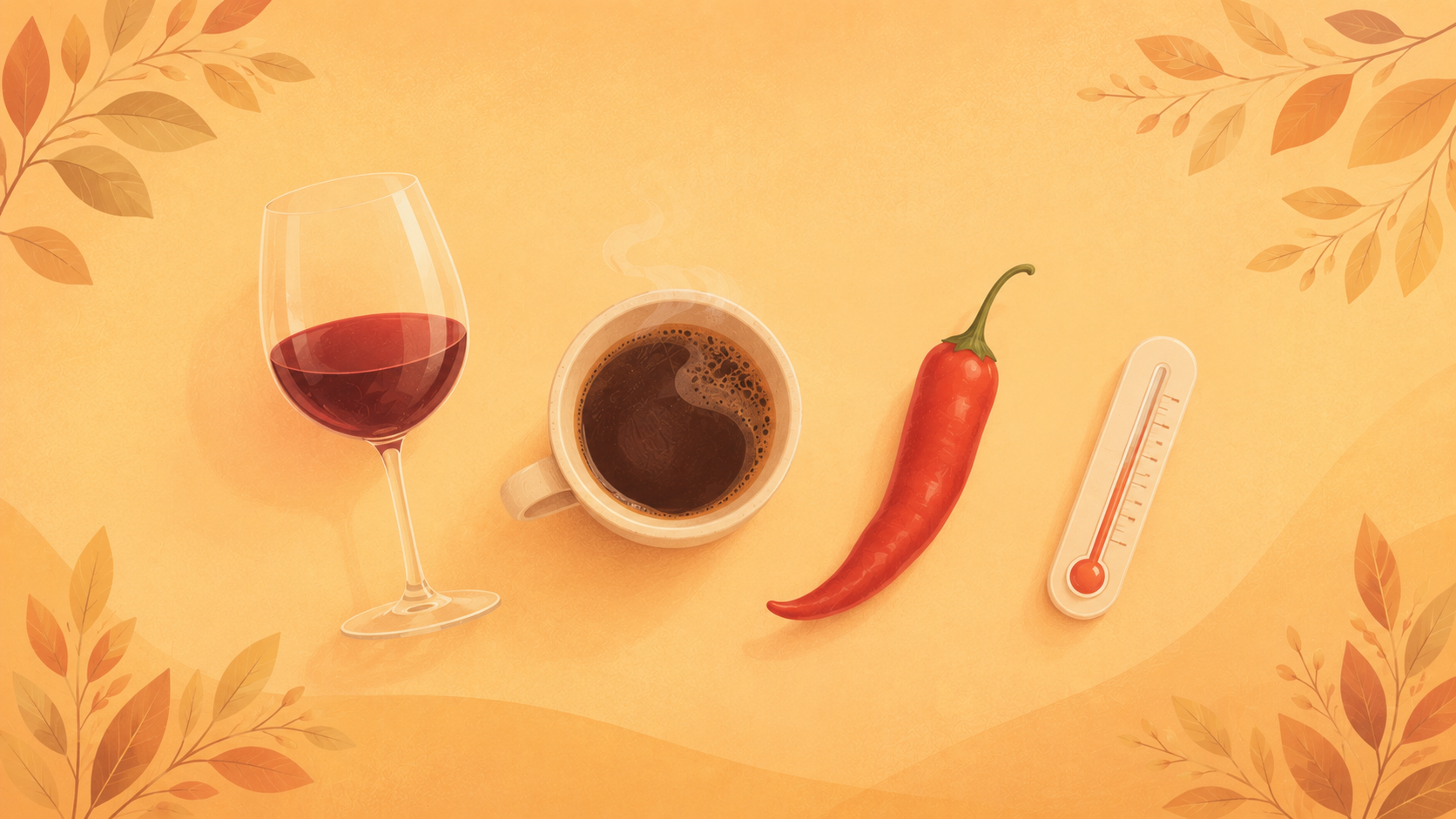
Hot flashes have a root cause in the brain, but everyday triggers decide how often they actually fire. The frustrating part is that triggers are personal - what sets off a flash for your friend may do nothing to you. The good news is that finding and reducing your triggers is one of the simplest ways to get relief, and it costs nothing.
Why triggers work at all
As estrogen falls in menopause, the brain's temperature-regulating KNDy neurons become oversensitive, so your internal "too hot" alarm has a hair trigger (the full mechanism is in our non-hormonal treatments guide). A trigger is simply anything that nudges your core temperature up a little or revs your nervous system - normally harmless, but now enough to tip an oversensitive system into a full heat-dump.
The usual suspects
Alcohol
One of the most commonly reported triggers. Alcohol dilates blood vessels and raises skin temperature, and it is a classic culprit for evening flashes and night sweats. Red wine is frequently singled out, but any drink can do it.
Caffeine
Coffee, tea, and energy drinks stimulate the nervous system and can bring on flashes in sensitive people - and the hot temperature of the drink adds to the effect.
Spicy food
Capsaicin, the compound that makes chilis hot, activates heat-sensing nerves and can directly set off a flash.
Hot drinks and hot food
Independent of spice or caffeine, the heat itself raises your core temperature. A steaming herbal tea can trigger a flash as easily as coffee.
Warm environments
Hot rooms, heated seats, saunas, hot baths, summer weather, and being under thick bedding all push core temperature up. This is why a cool bedroom matters so much for night sweats.
Stress and strong emotions
Anxiety and stress activate the same nervous-system pathways involved in flashes, and many women notice flashes spike during tense moments. Stress reduction and CBT genuinely help - see menopause and sleep.
Smoking
Smoking is linked to more frequent and more severe hot flashes, and to them lasting longer overall. It is one of the few triggers that also shortens your options, so it is worth prioritizing.
Tight or heavy clothing
Restrictive or non-breathable clothing traps heat. Light, breathable layers you can remove are the practical fix.
Finding your personal triggers
Because the list is long and individual, guessing is inefficient. The reliable method is to track flashes alongside what preceded them for a few weeks:
- Log each flash with its time and severity.
- Note what you ate, drank, and did in the hour or two before - especially alcohol, caffeine, spicy or hot food, and stress.
- Look for patterns after two to three weeks. If evening wine reliably precedes a 10 p.m. flash, you have found a lever.
- Test by removing one suspected trigger at a time and watching whether flashes drop.
This is far more useful than blanket-avoiding everything, which is miserable and often unnecessary - you may react to two things on this list, not all of them.
Triggers are not the whole story
Reducing triggers lowers how often flashes hit, but it does not fix the underlying brain sensitivity. If flashes are still disrupting your life after you have cut your triggers, that is a signal to talk treatment, not to try harder:
- Non-hormonal prescription options in our 2026 treatments guide
- Hormone therapy in our hormone therapy in 2026 guide
- Context on the timeline in how long hot flashes last
How Femora helps
Trigger-hunting is exactly the kind of pattern-finding a tracker is built for. In Femora you can log each hot flash with severity and jot the likely trigger, so over a few weeks your personal culprits become obvious instead of theoretical. Put a number on the overall impact with the menopause symptom score, and keep flashes, triggers, sleep, and mood together in menopause mode.
The bigger picture
Hot flash triggers are the everyday sparks - alcohol, caffeine, spice, heat, stress, smoking - landing on an oversensitive brain. You cannot change the sensitivity by lifestyle alone, but you can remove the sparks, and finding your specific ones is a free, effective first step. Track, test, and reduce - then treat the rest.
Want to uncover your triggers? Download Femora.
Sources
- Hot flashes: Symptoms and causes - Mayo Clinic.
- Menopause - NHS.
- Menopause and your health - Office on Women's Health.