Iron, Your Period, and Fatigue: A Woman's Guide to Low Iron
Last reviewed July 23, 2026 by Dr. Sapna Jadhav, General Physician. Sources from ACOG, NHS, Mayo Clinic, CDC, NICE, NIH, Cochrane, and peer-reviewed journals.
Iron deficiency is the world's most common nutrient shortfall, and menstruating women carry most of it because every period loses iron. It progresses from low stores (low ferritin - the earliest, most missed stage) to full anemia; signs include fatigue, breathlessness, pale skin, brittle nails, hair shedding, cold extremities, and ice cravings. Raise iron with heme foods (red meat, shellfish) and non-heme foods (lentils, spinach, fortified cereals) paired with vitamin C, while keeping coffee, tea, and calcium away from iron meals. A blood test diagnoses it, supplements need a confirmed deficiency, and refilling stores takes three to six months.
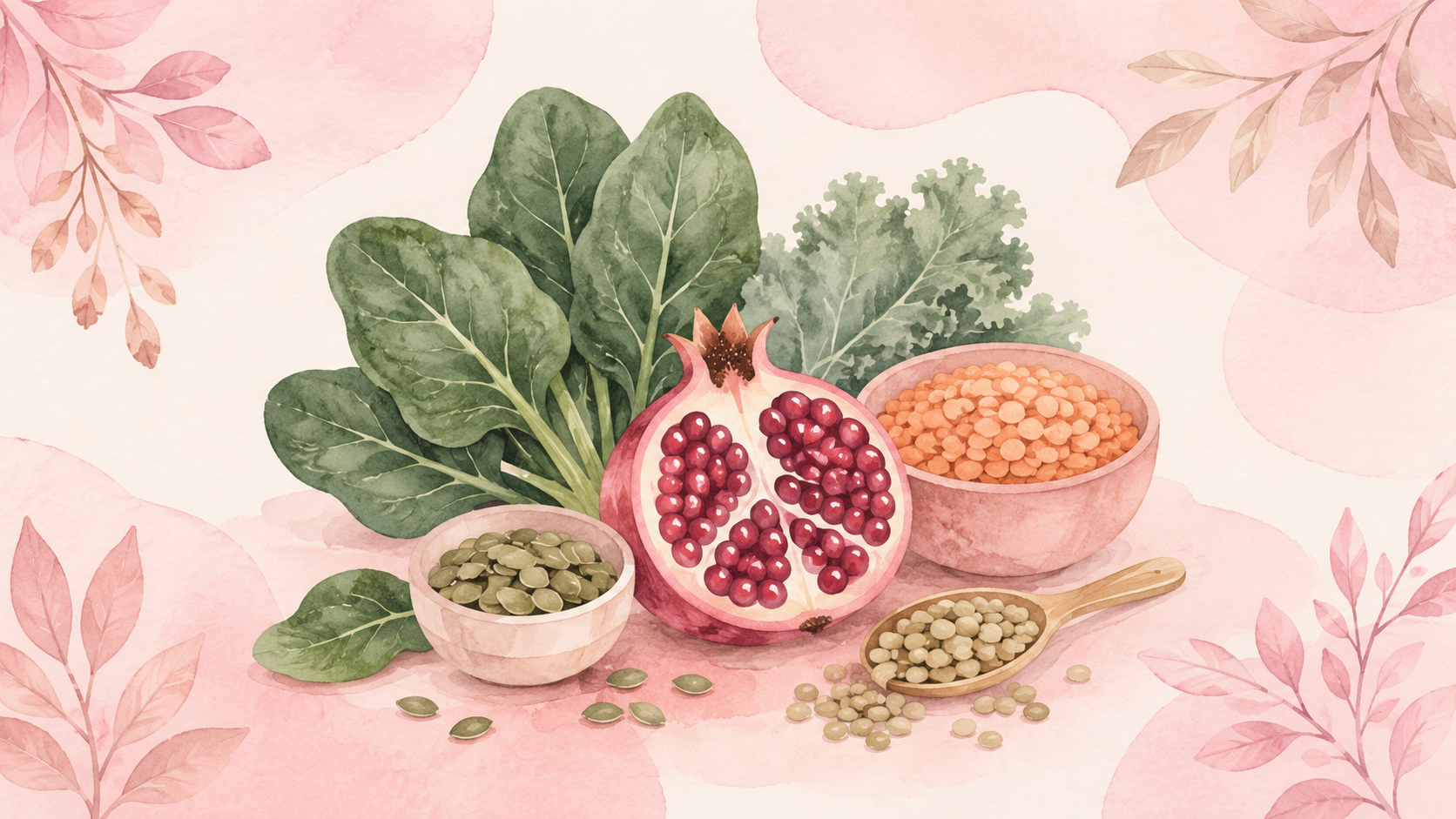
If you are a woman who feels tired no matter how much you sleep, iron is one of the first things worth ruling out. Iron deficiency is the most common nutritional deficiency in the world, and women of reproductive age carry a disproportionate share of it - largely because every period is a small, repeated withdrawal from the body's iron account.
Here is a plain-language tour of why women run low, how to spot it, and what actually raises your iron - plus direct answers to the questions people search most.
Why women run low on iron
Iron's main job is to build hemoglobin, the protein in red blood cells that carries oxygen from your lungs to the rest of your body. When iron runs short, your blood carries less oxygen, and almost every symptom of deficiency flows from that single fact - tissues that are quietly starved of oxygen.
Women lose iron in ways men usually do not:
- Menstruation. Every period sheds blood, and with it iron. Heavier or longer periods lose more - which is why heavy periods are a leading cause of iron-deficiency anemia.
- Pregnancy. Building a baby's blood supply and placenta roughly doubles iron demand, and stores often do not recover fully before the next demand arrives.
- Diet. Iron from plants (non-heme iron) is absorbed far less efficiently than iron from meat, so vegetarians and vegans have to work harder to hit the same target.
The result: roughly a third of women of reproductive age have low iron stores, and many never know it because the symptoms creep in slowly and get blamed on a busy life.
Low iron vs anemia - they are not the same
This distinction matters. Your body drains iron in stages:
- Low iron stores (low ferritin). Your reserve tank empties first. Ferritin is the protein that stores iron, and a blood test for it is the earliest warning - you can feel tired, foggy, and cold here while your standard "anemia" test still looks normal.
- Iron-deficiency anemia. When stores are gone, hemoglobin itself falls. This is the stage most doctors screen for, but it is the late stage - a lot of suffering happens before it.
The practical takeaway: if you feel deficient but a basic blood count came back "normal," ask specifically about a ferritin test. It catches the problem earlier.
Signs of low iron in women
Iron deficiency is quiet and easy to dismiss. The most common signs:
- Persistent fatigue and low energy that sleep does not fix
- Breathlessness on stairs or light exertion
- Pale skin, or paleness inside the lower eyelids
- Brittle nails and increased hair shedding
- Cold hands and feet
- Headaches, dizziness, or a racing heart
- Restless legs at night
- Pica - craving and chewing ice, or non-food items like clay or paper
No single symptom is proof, but when several stack up, a blood test settles it. Iron deficiency is diagnosed with a blood test, never guessed from symptoms alone.
The foods that actually raise your iron
There are two kinds of dietary iron, and they behave very differently.
Heme iron comes from animal foods and is absorbed easily:
- Red meat and liver (the richest source)
- Poultry and fish
- Shellfish, especially clams, mussels, and oysters
Non-heme iron comes from plants and is absorbed less efficiently - but there is a lot of it, and you can boost how much your body takes up:
- Lentils, chickpeas, beans, and tofu
- Dark leafy greens like spinach
- Pumpkin seeds and cashews
- Fortified breakfast cereals
- Dried apricots and dark chocolate
The absorption trick that matters most
You do not just eat iron - you have to absorb it, and this is where most people lose ground without realizing it.
Vitamin C dramatically boosts non-heme iron absorption. Pairing plant iron with a vitamin-C food in the same meal - a squeeze of lemon on lentils, peppers in a stir-fry, orange juice with fortified cereal - can multiply how much iron you actually take up. If you eat little or no meat, this single habit does more than any other.
Some things block absorption when eaten with iron:
- Coffee and tea contain polyphenols that bind iron - a strong cup with a meal can cut absorption sharply. Move it to an hour before or after.
- Calcium (dairy, calcium supplements) competes with iron. Do not take an iron supplement with milk or a calcium pill.
- Whole grains and legumes contain phytates that reduce absorption - not a reason to avoid them (they are also iron sources), just a reason to lean on the vitamin C trick.
About iron supplements
If a blood test confirms deficiency, a clinician may recommend an iron supplement. A few evidence-based points worth knowing:
- Do not self-prescribe iron without a test. Iron overload is a real risk, especially for postmenopausal women and anyone who does not actually need it - the body has no easy way to shed excess iron.
- More is not faster. Research increasingly favors lower or alternate-day dosing, which can absorb better and cause fewer side effects than large daily doses.
- Take it away from coffee, tea, and calcium, ideally with a vitamin-C source.
- Recovery takes months, not days. Even with treatment, refilling depleted iron stores typically takes three to six months - and you should keep going after you feel better, until stores, not just hemoglobin, are restored.
- Constipation and stomach upset are common. Gentler forms and alternate-day dosing help; tell your clinician rather than quitting.
Where Femora fits
The cycle connection is the piece women most often miss: if your iron keeps dropping, the cause may be sitting in your period. Logging your flow intensity in Femora over a few cycles gives you and your clinician real data on how heavy your bleeding actually is - the difference between "I think they're heavy" and a documented pattern that explains the fatigue. If you notice flooding, clots, or periods lasting longer than seven days alongside these symptoms, that is worth a conversation.
Frequently asked questions
What are the signs of low iron in women? Fatigue that sleep does not fix, breathlessness, pale skin, brittle nails, hair shedding, cold hands and feet, headaches, restless legs, and cravings for ice. A blood test confirms it. More detail here.
What foods are highest in iron? Red meat, liver, and shellfish for heme iron; lentils, beans, tofu, spinach, pumpkin seeds, and fortified cereals for non-heme iron. Full list.
How can I absorb more iron? Pair plant iron with vitamin C, and keep coffee, tea, and calcium away from iron-rich meals. Why it works.
Does coffee really block iron? Yes - drink it an hour before or after an iron-rich meal, not with it. Details.
How long does it take to raise iron levels? Symptoms can ease within weeks, but refilling stores usually takes three to six months of consistent treatment. Timeline.
Should I take iron on an empty stomach? It absorbs best on an empty stomach, but many people need to take it with a little food to tolerate it. How to decide.
Low iron is common, quiet, and very fixable once you find it. If you are tired all the time and have heavy periods, do not wait it out - ask for a ferritin test.
Download Femora to track your flow and symptoms so you and your clinician can connect the dots: https://femora.app/download/
Sources
- Iron - Fact Sheet for Health Professionals - National Institutes of Health, Office of Dietary Supplements.
- Iron deficiency anaemia - NHS.
- Iron-deficiency anemia - Office on Women's Health (HHS).
- Iron deficiency anemia - Mayo Clinic.