Do Antibiotics Affect Birth Control? What the Evidence Says
Most antibiotics - including amoxicillin, doxycycline, azithromycin, and metronidazole - do not reduce the effectiveness of hormonal birth control. The main exceptions are the rifamycin antibiotics rifampin and rifabutin (used mainly for tuberculosis), which do, and require a backup method. The antifungal griseofulvin also reduces effectiveness.
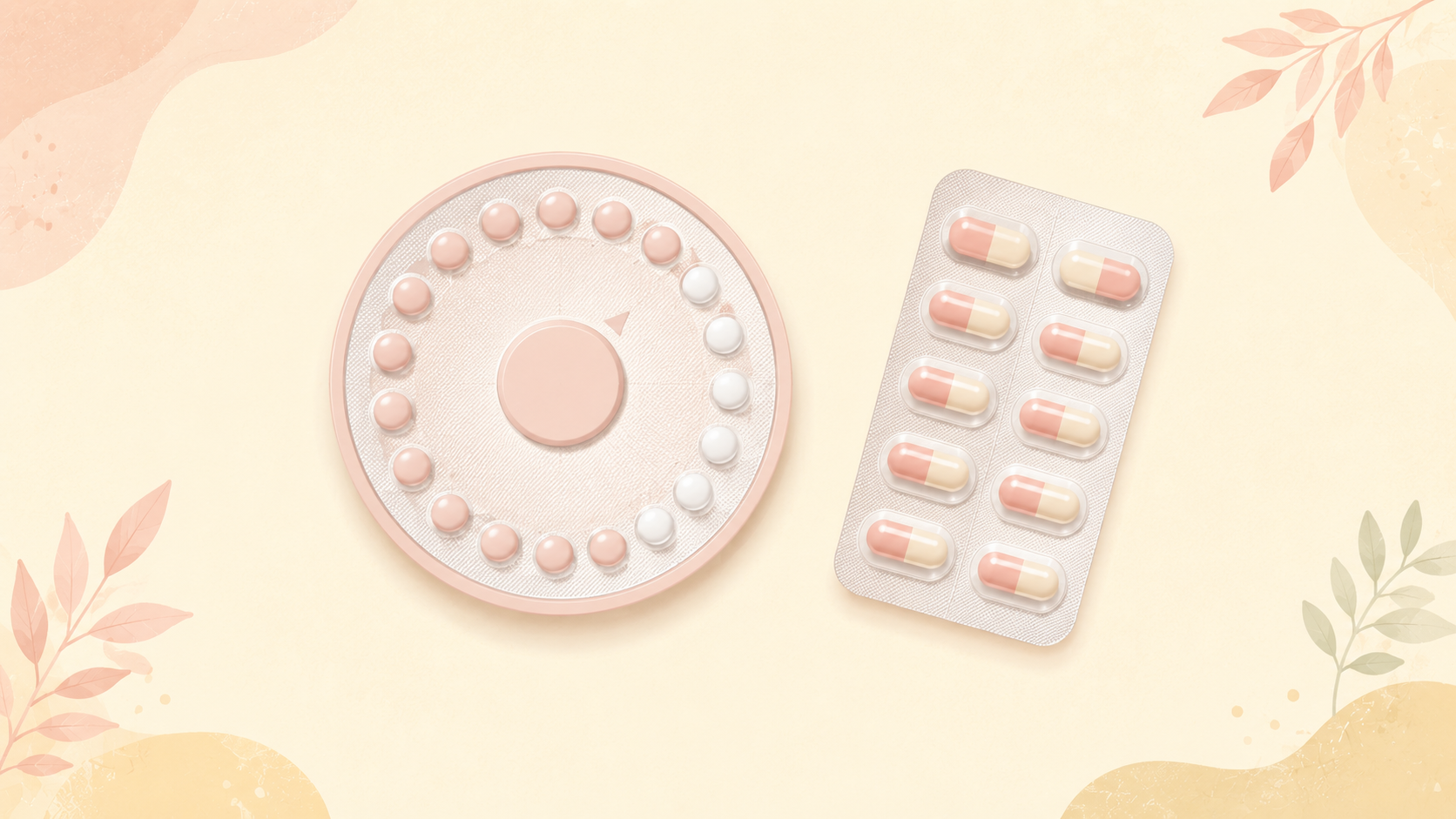
Almost everyone has been told at some point: "You're on antibiotics, so use a backup with your pill this week." It is one of the most repeated pieces of health advice - and for the vast majority of antibiotics, it is a myth.
Here is what the evidence actually shows, so you know when to worry and when not to.
The short answer
Most antibiotics do not make hormonal birth control less effective. The pills, patch, ring, implant, and hormonal IUD keep working normally while you take common antibiotics like amoxicillin for a chest infection or doxycycline for acne.
There is one real exception: the rifamycin class of antibiotics - mainly rifampin (rifampicin) and rifabutin, used primarily to treat tuberculosis. These genuinely lower contraceptive hormone levels and do require a backup method.
Why the myth is so widespread
The belief comes from a few places:
- Old theory, since disproven. The original idea was that antibiotics might disrupt gut bacteria involved in recycling estrogen. Later research found this effect is negligible for ordinary antibiotics.
- A few case reports decades ago described pill failures on antibiotics, but these were rare and could not be separated from missed pills, vomiting, or diarrhea (which genuinely can reduce absorption).
- Cautious label wording. Some packaging still carries blanket warnings, which keeps the myth alive even though major bodies have moved on.
Modern guidance from bodies including ACOG and the CDC is clear: routine backup contraception is not needed for most antibiotics.
The one class that does matter
Rifampin and rifabutin are enzyme-inducers. They speed up the liver enzymes that break down contraceptive hormones, lowering the hormone levels in your blood enough to risk ovulation. If you are prescribed either of these:
- Use condoms or another backup method while taking them and for 28 days after finishing.
- Or talk to your clinician about a method that is not affected, such as a copper IUD or an injection.
The antifungal griseofulvin (for some skin and nail infections) works the same way and needs the same precautions. So do certain anti-seizure and HIV medications - not antibiotics, but worth knowing if you take them.
Antibiotics that do NOT reduce birth control effectiveness
These common antibiotics do not require backup contraception on their own:
- Amoxicillin and other penicillins
- Doxycycline and other tetracyclines
- Azithromycin and other macrolides
- Metronidazole
- Cephalexin and other cephalosporins
- Ciprofloxacin and other fluoroquinolones
- Nitrofurantoin and trimethoprim (common for UTIs)
If your prescription is one of these, your birth control keeps working as usual.
The real thing to watch: being sick
The bigger risk when you are on antibiotics is not the drug - it is the illness. If you vomit within a couple of hours of taking your pill, or have significant diarrhea, your body may not absorb the hormone properly. That, not the antibiotic itself, is when to use backup.
So the practical rule is: keep taking your pill on schedule, and if you are throwing up or have bad diarrhea, treat it like a missed pill and use a backup method until you have taken pills reliably again for 7 days.
What to do
- Check the antibiotic name. If it is rifampin, rifabutin, or griseofulvin, use backup during and for 28 days after. If it is anything else, no backup is needed for the drug itself.
- Ask your pharmacist or prescriber if you are unsure - a simple, direct question: "Does this specific antibiotic affect my hormonal birth control?"
- Keep taking your birth control on schedule through the course.
- Use backup if you vomit or have diarrhea around your pill time, and for 7 days after you recover.
- Never stop your birth control because of an antibiotic - that is the one thing that clearly increases pregnancy risk.
How Femora helps
Being sick throws your routine off, which is exactly when pills get missed. Femora's medication reminders keep your birth control on schedule even when you are unwell, and you can log symptoms like vomiting or diarrhea so you have a clear record of the days a backup was warranted.
If you are weighing methods, our free Birth Control Finder helps you compare options, and you can chat with a health expert in the app if you are unsure about an interaction. For tracking your cycle on birth control, see our guide on tracking your cycle on birth control.
The bigger picture
This is a rare case where the cautious-sounding advice - "always use backup" - is actually the less accurate one. For the antibiotics almost everyone is prescribed, your birth control keeps working. Knowing the one class that matters, and knowing that being sick is the real risk, is more useful than a blanket rule that causes unnecessary worry.
This is general information, not a substitute for your prescriber's advice. Download Femora to keep your birth control on schedule.
Sources
- Can antibiotics make my birth control not work? - Planned Parenthood.
- Drug interactions between rifamycin antibiotics and hormonal contraception: a systematic review - PubMed Central (BJOG), 2024.
- U.S. Medical Eligibility Criteria for Contraceptive Use - Centers for Disease Control and Prevention.
- Combined pill - how it works with other medicines - NHS.