The Best Exercises for Period Cramps and PMS
Last reviewed July 3, 2026 by Dr. Sapna Jadhav, General Physician. Sources from ACOG, NHS, Mayo Clinic, CDC, NICE, NIH, Cochrane, and peer-reviewed journals.
Gentle to moderate exercise genuinely helps period cramps and PMS: walking and light aerobic activity, yoga poses like child's pose and cat-cow, and easy stretching are the best-supported options. Aim for about 30 minutes most days, scale back on heavy or painful days, and see a clinician if pain is severe.
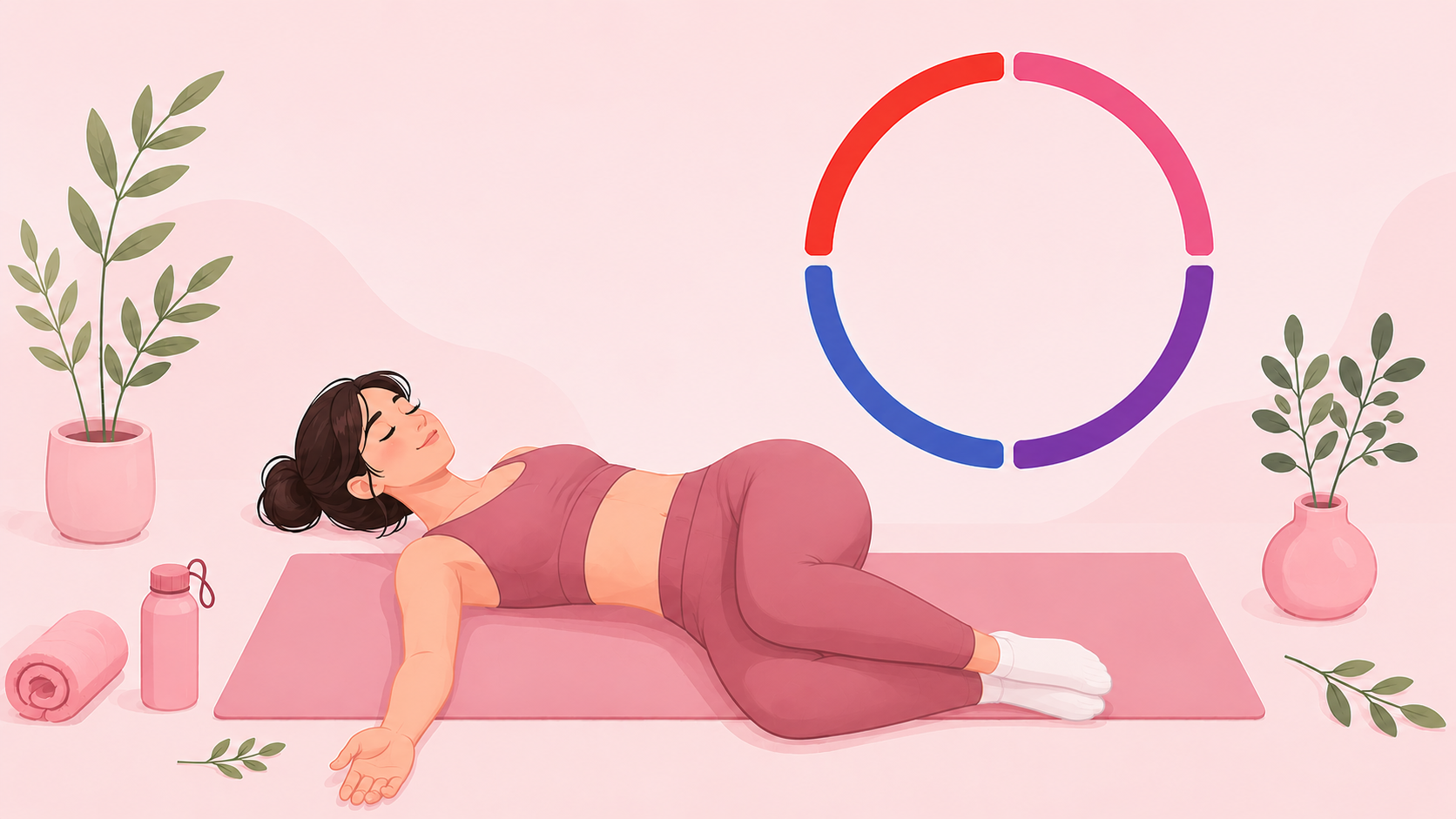
When you are doubled over with cramps, "go for a walk" can sound almost insulting. But of all the home remedies for period pain, movement is one of the few with real research behind it, not just word of mouth.
This is not about pushing through a workout or "earning" your rest. It is about which specific, gentle forms of movement actually ease cramps, lift a low mood, and take the edge off PMS, and, just as importantly, when to skip the gym entirely.
Does exercise really help period pain?
Yes, and the evidence is better than for most things people try.
A 2019 Cochrane review, the gold standard for weighing up medical evidence, looked at exercise for period pain (primary dysmenorrhoea) across 12 trials and around 854 women. Its conclusion was striking: exercise, whether low intensity like yoga or higher intensity like aerobics, may produce a large reduction in the intensity of period pain compared with doing nothing. Sessions were typically around 45 to 60 minutes, three times a week.
For PMS, the picture is similar. Reviews of the research suggest that regular aerobic exercise, roughly 30 minutes three to five times a week, can reduce both the physical and the emotional symptoms of PMS, and separate analyses of yoga point the same way for premenstrual symptom relief.
Two honest caveats. Many of these studies are small, and researchers still call for larger, better-designed trials. And exercise is a tool for manageable symptoms, not a cure for severe pain or an underlying condition. With that framing, here is what actually works.
Best exercises for cramps
The goal during cramps is gentle movement that boosts blood flow and relaxes the lower abdomen and back, not a punishing session.
Walking and light cardio
The simplest option is often the most effective. A 20 to 30 minute walk raises circulation and triggers endorphins, your body's natural painkillers. Light cycling or an easy swim does the same. Keep the effort conversational, where you can still talk comfortably.
Yoga poses that target the pelvis and lower back
A handful of poses are particularly good for cramp relief because they gently stretch and release the areas that ache:
- Child's pose (Balasana) - kneel and fold forward with arms extended; eases lower-back and pelvic tension.
- Cat-cow (Marjaryasana-Bitilasana) - on hands and knees, alternate arching and rounding your back; mobilises the spine and massages the abdomen.
- Supine twist - lie on your back and drop both knees to one side; releases the lower back.
- Reclining bound angle (Supta Baddha Konasana) - lie back with the soles of your feet together and knees dropped open; a restful hip opener.
Hold each for several slow breaths. The breathing matters as much as the shape.
Gentle stretching and core work
Light stretching of the hips, hamstrings, and lower back relieves the muscular tension that cramps create. Very gentle core engagement, like a slow pelvic tilt, can also help, but skip hard abdominal work on painful days.
Best exercises for PMS mood and energy
In the premenstrual (luteal) days, the aim shifts from pain relief to steadying mood and energy.
- Steady aerobic exercise - brisk walking, jogging, swimming, or cycling for about 30 minutes is the best-supported option for lifting low mood and reducing irritability and fatigue.
- Yoga and Pilates - combine gentle strength with breath and relaxation, which helps with the tension and anxiety side of PMS.
- Strength training - moderate resistance work supports mood and energy too; you do not need to lift your heaviest to benefit.
Consistency beats intensity here. A regular, moderate routine across the whole month does more for PMS than occasional hard sessions.
Moving on low-energy days
Some days you will not have it in you, and that is fine. The trick is to lower the bar rather than skip movement entirely:
- Swap a workout for a 10-minute walk or a few gentle stretches.
- Try restorative yoga or simple mobility instead of a full session.
- Focus on sleep and recovery in the days before your period, when energy naturally dips.
A little gentle movement almost always feels better than none, but rest is a legitimate choice, not a failure.
When to take it easy, and myths to drop
- You do not have to stop exercising on your period. Movement will not make bleeding worse, and for many people it eases cramps. Use period products you trust and carry on if you feel up to it.
- Inversions during your period are fine. The old warning that yoga inversions are dangerous on your period is a myth with no evidence behind it. Do what is comfortable.
- More is not better. Very intense training combined with under-eating can push the body into losing periods altogether, part of a pattern known as relative energy deficiency in sport (RED-S). Missing periods because of heavy training is a signal to eat more and train less, not a badge of honour.
When exercise is not the answer
Exercise helps ordinary period pain and PMS. It does not fix everything, and leaning on it can delay care you actually need. See a clinician rather than just adding more yoga if you have:
- Period pain that is severe, getting worse, or stops you doing normal activities
- Pain that does not ease with movement, heat, or usual pain relief
- Missed periods when you are not pregnant, especially alongside heavy training
- Symptoms that point to a condition like endometriosis (see our guide on period pain vs endometriosis pain) or PMDD (PMS vs PMDD)
Severe or worsening pain is a reason to be assessed, not to push harder.
How Femora helps
Exercise works best for symptoms when it is timed to how you actually feel, and that is where cycle tracking earns its place. Femora shows you which phase you are in and lets you log symptoms like cramps, mood, and energy, so you can spot your own pattern: the days you tend to need gentle movement and the days you have the energy to push.
Over a few cycles you can see whether a regular routine is genuinely taking the edge off your symptoms, rather than relying on a hunch. And if your pain is severe or your periods go missing, you can chat with a health expert in the app to work out whether it is time to see your doctor.
Want to know where you are in your cycle right now? Try the free Menstrual Cycle Calculator, or download Femora to track your phases and symptoms in one private place.
Frequently asked questions
What is the best exercise for period cramps? Gentle aerobic movement like a 20 to 30 minute walk is the simplest and best-supported option, because it boosts circulation and releases endorphins. Yoga poses such as child's pose, cat-cow, and supine twists specifically target the lower back and pelvis. Keep the intensity easy.
Should I exercise on my period? You can, and it often helps. There is no need to stop, and movement will not make bleeding heavier. Choose period products you trust, scale intensity to your energy, and rest if you have severe pain, dizziness, or unusually heavy bleeding.
Does exercise help PMS? Research suggests it does. About 30 minutes of aerobic exercise three to five times a week can reduce both the physical and emotional symptoms of PMS, and yoga has similar support for premenstrual symptom relief. Consistency across the month matters more than occasional hard workouts.
Can too much exercise affect my period? Yes. Very intense training, especially combined with not eating enough, can make periods irregular or stop them altogether (part of a pattern called RED-S). Missing periods because of heavy training is a reason to eat more, train less, and speak to a clinician.
How soon does exercise help with cramps? Many people feel some relief during or shortly after a gentle session, as circulation improves and endorphins kick in. For PMS, the bigger benefit comes from exercising regularly across the whole cycle rather than only when symptoms appear.
Sources
- Exercise for dysmenorrhoea (Armour et al., Cochrane review) - Cochrane Database of Systematic Reviews, 2019.
- Exercise for premenstrual syndrome: a systematic review and meta-analysis of randomised controlled trials - BJGP Open (PMC), 2020.
- Effect of Aerobic Exercises in Improving Premenstrual Symptoms Among Healthy Women: A Systematic Review of Randomized Controlled Trials - International Journal of Women's Health (PMC), 2022.
- Period pain - NHS.
- Dysmenorrhea: Painful Periods - American College of Obstetricians and Gynecologists.