The Birth Control Pill: 15 Facts Every Woman Deserves to Know
The birth control pill is over 99% effective with perfect use (about 93% in real life), does not cause infertility or significant weight gain, lowers the risk of ovarian and endometrial cancer while slightly raising breast and cervical cancer risk during use, and the monthly bleed it produces is not a real period - which is why skipping it is safe for most women.
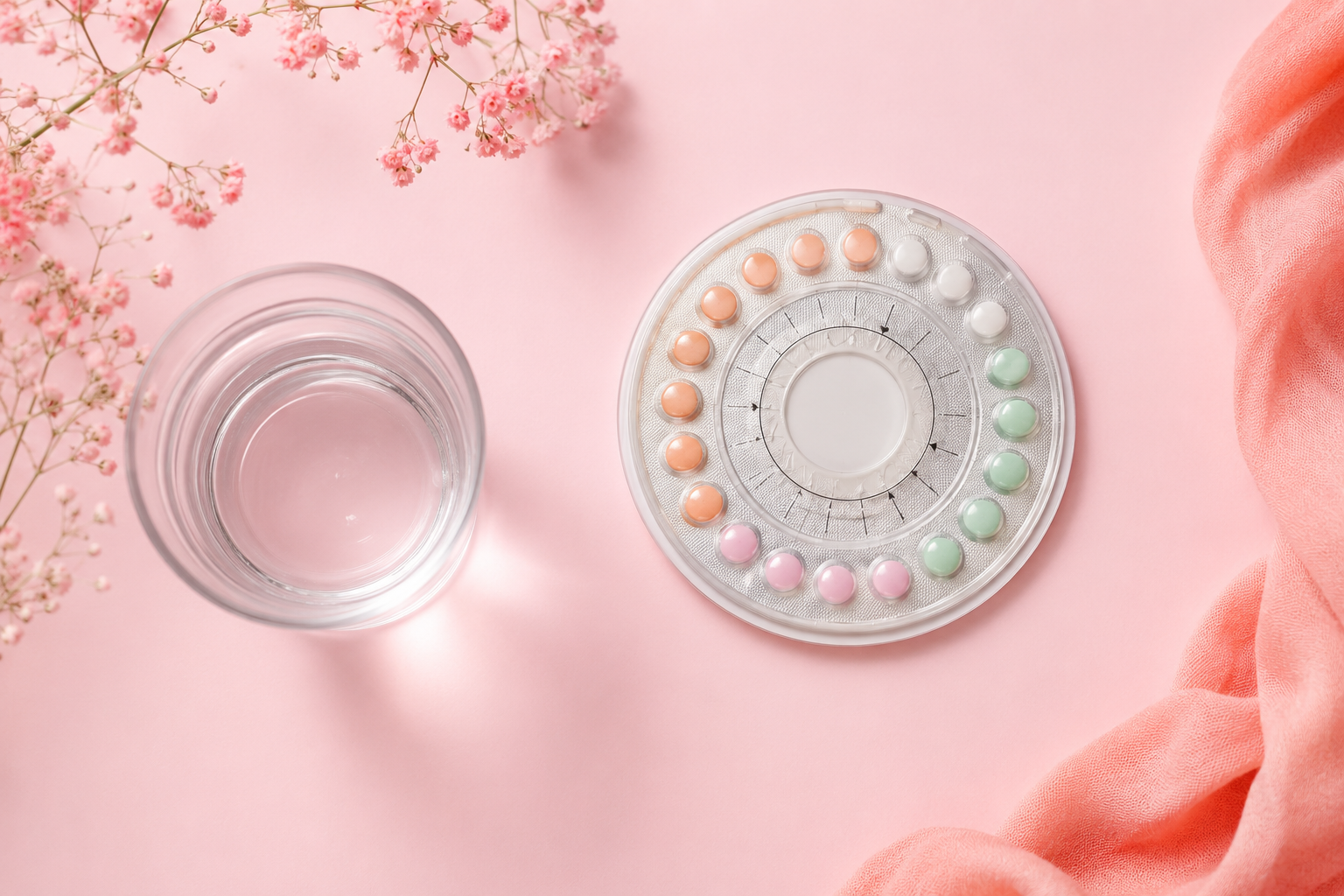
More than 100 million women worldwide take the birth control pill, yet myths about it outnumber facts almost everywhere you look. Does it cause weight gain? Will it make you infertile? Do you need to take a break from it? Is the bleed on the pill even a real period?
Here are 15 facts about the pill, drawn from what major medical bodies like ACOG, the CDC, and the NHS actually say - so you can make decisions based on evidence, not folklore.
1. It is over 99% effective - but only with perfect use
Taken exactly as directed, the pill prevents more than 99 out of 100 pregnancies. In real life, with the occasional late or missed pill, effectiveness drops to about 93% - meaning around 7 in 100 users become pregnant in a year. That gap between "perfect use" and "typical use" is the single most important number on this list: the pill works extremely well, but only as well as your routine does.
2. There are two main types, and they work differently
The combined pill contains estrogen and progestin. The progestin-only pill (the "mini pill") has no estrogen, which makes it suitable for women who are breastfeeding, have migraine with aura, or cannot take estrogen for other reasons. They have different rules for missed pills, different side-effect profiles, and different timing requirements - so "the pill" is really two different medications. Our guide to combined pill vs mini pill breaks down the differences.
3. It works mainly by stopping ovulation
The pill's primary job is to prevent your ovaries from releasing an egg. No egg, no pregnancy. As backup, it also thickens cervical mucus (making it harder for sperm to travel) and thins the uterine lining. This is why the pill regulates cycles so predictably: it takes over the hormonal conversation between your brain and your ovaries.
4. The bleed on the pill is not a real period
The bleeding you get during the pill-free or placebo week is withdrawal bleeding - your body's response to the drop in synthetic hormones. It is not a true menstrual period, because you did not ovulate and did not build up the same uterine lining. The 7-day break was a design choice made in the 1950s, partly in the hope of making the pill feel more "natural." There is no medical need for it.
5. Skipping your "period" on the pill is safe for most women
Because the bleed is not a real period, running pill packs together to skip it is safe for most users - and guidance from bodies like the NHS and ACOG now says so explicitly. Continuous or extended use may cause some spotting at first, but there is no buildup of anything harmful. Many clinicians actively recommend it for period pain, heavy bleeding, PMS, and menstrual migraine.
6. The pill does not cause infertility
This is one of the most persistent myths - and one of the most clearly refuted. Fertility returns quickly after stopping the pill, usually within 1 to 3 months, regardless of how long you took it. What the pill can do is mask an underlying issue: if your cycles were irregular before you started, they will likely be irregular again when you stop. The pill did not cause that - it was hiding it. See what happens when you stop birth control for the full timeline.
7. The evidence does not support significant weight gain
Large systematic reviews, including a Cochrane review of 49 trials, found no evidence that the combined pill causes meaningful weight gain. Some women notice temporary fluid retention or appetite changes in the first months, and individual experiences vary - but on average, pill users gain no more weight than non-users over the same period. The contraceptive injection (Depo-Provera) is the hormonal method with the strongest link to weight gain, not the pill.
8. Most antibiotics do not stop the pill working
The advice to "always use backup on antibiotics" is a myth for nearly every antibiotic in common use. The real exceptions are the rifamycins (rifampin and rifabutin, mainly used for tuberculosis) and the antifungal griseofulvin. Amoxicillin, doxycycline, azithromycin, metronidazole, and other everyday antibiotics do not reduce the pill's effectiveness. The bigger risk when you are sick is vomiting or diarrhea, which can stop the pill being absorbed. We cover the full evidence in do antibiotics affect birth control.
9. The pill lowers your risk of several cancers
This surprises almost everyone: the pill has protective effects against ovarian, endometrial, and colorectal cancer. Women who have ever used the pill have roughly a 30-50% lower risk of ovarian cancer and at least a 30% lower risk of endometrial cancer, and the protection lasts for decades after stopping. The longer you take it, the stronger the protection.
10. It slightly raises breast and cervical cancer risk - while you take it
The full picture requires both halves. Current or recent pill use is linked to a small increase in breast cancer risk (about a 20-30% relative increase on a small baseline risk for women of reproductive age), and longer use is linked to higher cervical cancer risk. Crucially, these risks decline after you stop and return to baseline within about 10 years. For most women, the absolute increase is small - but it is a real trade-off you deserve to know about, especially if you have a strong family history.
11. The blood clot risk is real, small, and not for everyone
The estrogen in the combined pill raises the risk of venous blood clots roughly 2-3 times over baseline. That sounds alarming until you see the absolute numbers: about 5-12 clots per 10,000 pill users per year, versus 1-5 in non-users - and pregnancy itself carries a higher clot risk than the pill does. Still, some women should not take the combined pill at all: smokers over 35, women with migraine with aura, uncontrolled high blood pressure, or a personal or family history of clots. That is exactly what the mini pill and non-hormonal methods are for - and why an honest medical history matters more than any list of side effects.
12. One missed pill is rarely an emergency - but the rules differ by type
Missing a single combined pill almost never puts you at risk of pregnancy: take it as soon as you remember and carry on. Miss two or more, and you need backup contraception for 7 days. The mini pill is stricter - traditional versions have just a 3-hour window (12 hours for desogestrel types) before you need backup. If you have just missed a pill and are not sure where you stand, our free missed pill calculator walks you through exactly what to do, and the Plan B window tool covers emergency contraception timing.
13. Mood changes are possible, but not inevitable
Some women genuinely experience low mood or mood swings on the pill; others notice nothing, and some feel better because PMS symptoms improve. Large studies are mixed - a well-known Danish study found a higher rate of first antidepressant use among pill users, especially teenagers, while other research finds no average effect on mood. The practical takeaway: your experience is real data. Track your mood for 2-3 cycles after starting a new pill, and if it clearly worsens, a different formulation or method may suit you better.
14. The pill treats far more than pregnancy risk
Clinicians prescribe the pill for acne, heavy menstrual bleeding, period pain, PMS and PMDD, endometriosis pain, and cycle regulation in PCOS. It can reduce menstrual blood loss substantially, which matters if heavy periods have left you iron-deficient. For many women these benefits, not contraception, are the main reason they take it.
15. It does not protect against STIs - and you never need a "break"
The pill does nothing against sexually transmitted infections; condoms remain the only contraception that does. And the idea that your body needs a periodic "rest" from the pill has no medical basis - it is safe to take for years without breaks, and stopping and restarting actually briefly raises the clot risk again each time you restart. Take breaks for your own reasons, not because your body "needs" one.
How Femora helps
The pill works as well as your routine does - and that is exactly where an app earns its keep. Femora's medication reminders keep your pill on schedule, and logging your bleeding, mood, and symptoms gives you a clear record of how a new pill is treating you, so conversations with your clinician are based on data instead of memory. If you are choosing or switching methods, start with our free Birth Control Finder, and see our guide to tracking your cycle on birth control for what your cycle data means while you are on it.
The bigger picture
The pill is one of the most studied medications in history. It is very effective when taken consistently, safe for most women, protective against some cancers, and carries small but real risks that a good clinician will screen for. You deserve the full picture - both halves of every trade-off - rather than the myths that fill the gaps.
This is general information, not a substitute for advice from your own clinician. Download Femora to keep your pill on schedule and your symptoms on record.
Sources
- Combined Hormonal Birth Control: Pill, Patch, and Ring - American College of Obstetricians and Gynecologists (ACOG).
- Contraception and Birth Control Methods - Centers for Disease Control and Prevention (CDC).
- Oral Contraceptives and Cancer Risk - National Cancer Institute (NCI).
- The combined pill - NHS.
- Combination contraceptives: effects on weight (Cochrane review) - PubMed (Cochrane Database of Systematic Reviews), 2014.
- When will my periods come back after I stop taking the pill? - NHS.
- Association of Hormonal Contraception With Depression - PubMed (JAMA Psychiatry), 2016.