Timing Medication to Your Menstrual Cycle: PMS, Migraine, Fertility, and HRT
Some medications work best timed to your cycle rather than the calendar - PMS relief and menstrual-migraine prevention in the days before your period, fertility trigger and luteal progesterone support around ovulation, and cyclical HRT each month; because the target day shifts every cycle, anchoring reminders to your predicted period (rather than a fixed date) keeps the timing accurate. Always follow your prescriber's plan.
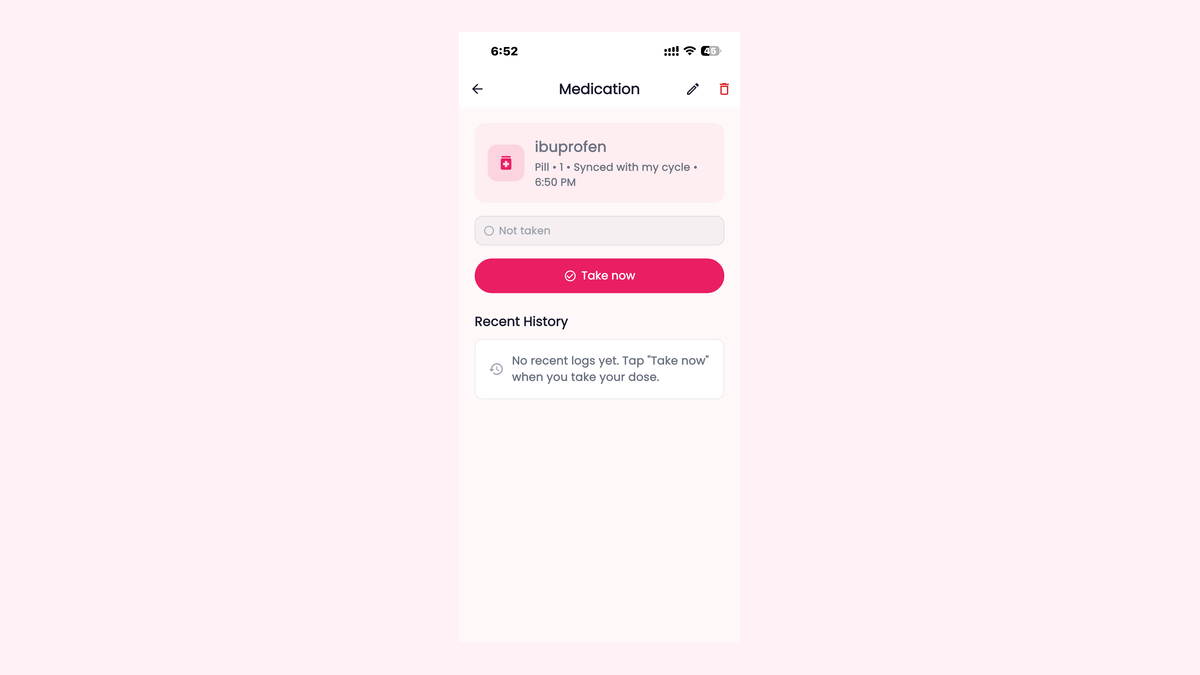
Most medicines are taken on a fixed schedule - once a day, with food, at the same time. But a handful of treatments work best when they are timed to your menstrual cycle instead, because the symptom or biological window they target moves with your hormones. Get the timing right and they work better; get it wrong and you can miss the window entirely.
Here is where cycle timing matters, and how to keep it from drifting out of sync.
PMS and PMDD: start before the symptoms
Premenstrual symptoms cluster in the luteal phase - the roughly two weeks between ovulation and your period. For many people, relief works best when it starts a few days before symptoms usually peak rather than after they have already taken hold.
That is why a common pattern is to begin a daily course about 9 days before your period and continue into the first day or two of bleeding, then stop. Because it is keyed to your period, the dates shift slightly every cycle.
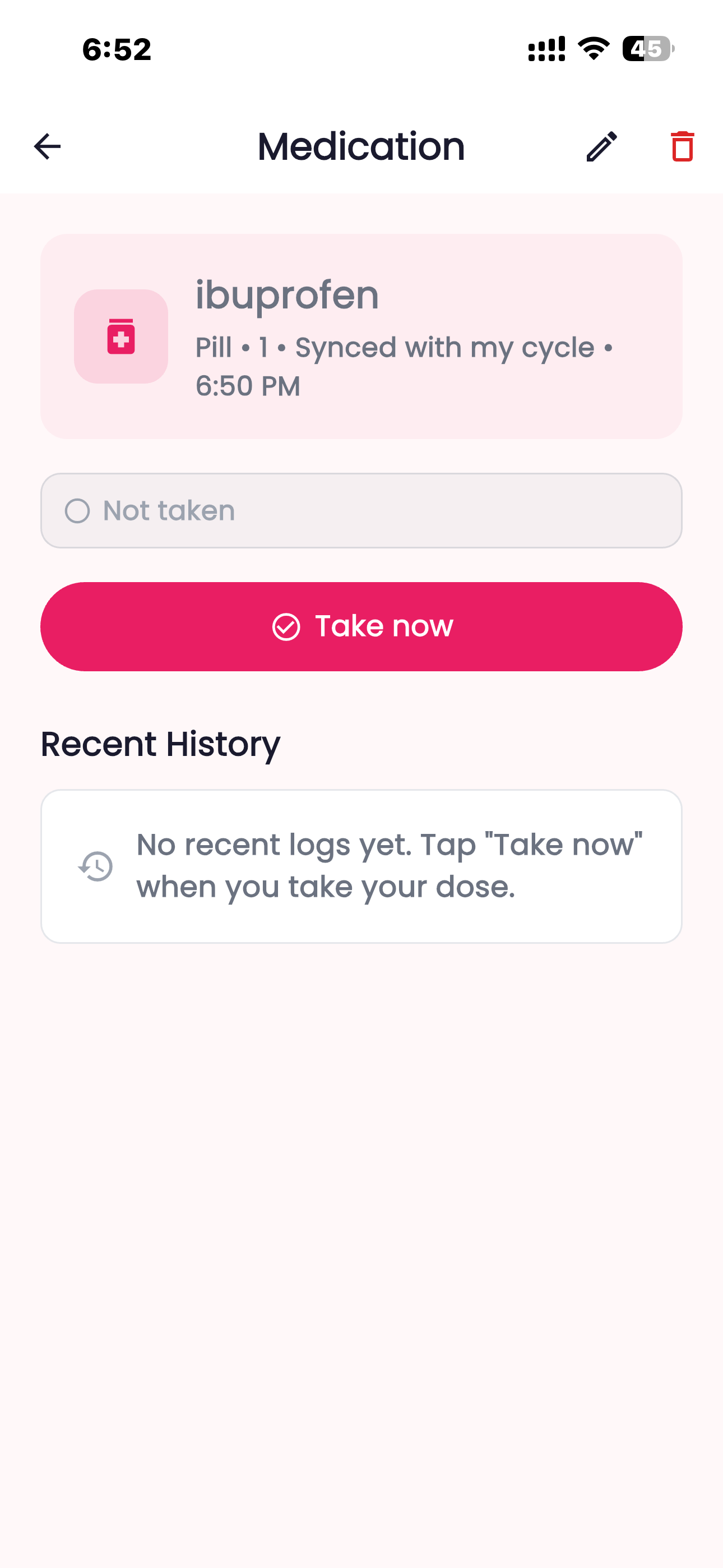
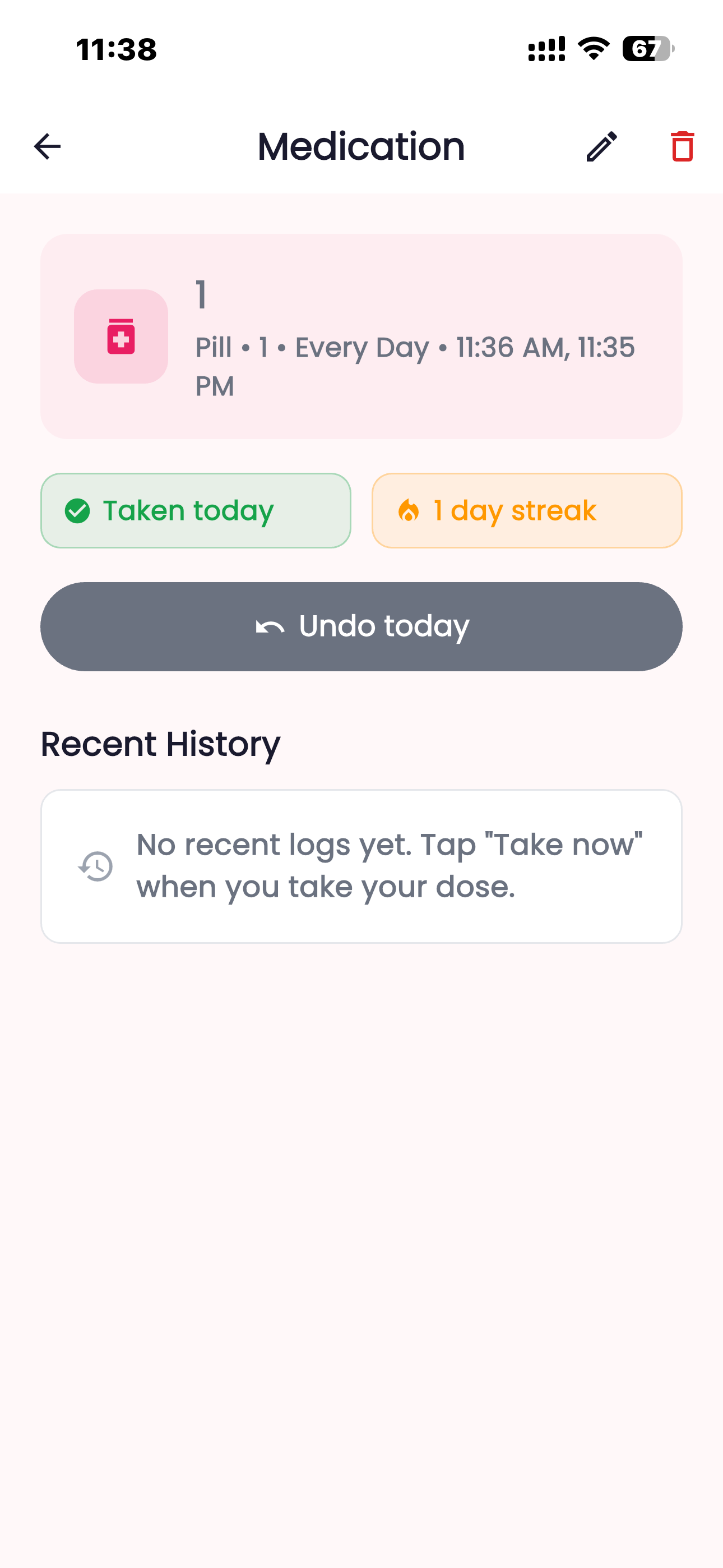
What this looks like in practice: you take the dose during the pre-period window, mark it taken, and the app tracks your run so you can see whether the timing is actually helping.
If your premenstrual mood changes are severe rather than just uncomfortable, that may be PMDD, which is managed differently - see PMS vs PMDD and talk to a clinician about a timed plan.
Menstrual migraine: the estrogen-drop window
Menstrual migraine is triggered by the sharp fall in estrogen just before your period. Because the trigger is predictable, some people are prescribed a short preventive course timed to those few days - "mini-prophylaxis" - rather than taking something every day of the month.
The catch is the same as PMS: the window is only a few days wide and it moves with your cycle, so fixed-date reminders quietly fall behind. See menstrual migraine and hormonal headaches for the full picture, including why migraine with aura affects birth control choices.
Fertility and IVF/IUI: anchored to cycle days
Fertility protocols are some of the most timing-sensitive medication of all. Trigger shots are timed to ovulation. Luteal progesterone support runs through the second half of the cycle. IVF and IUI cycles are built around specific cycle days from the start.
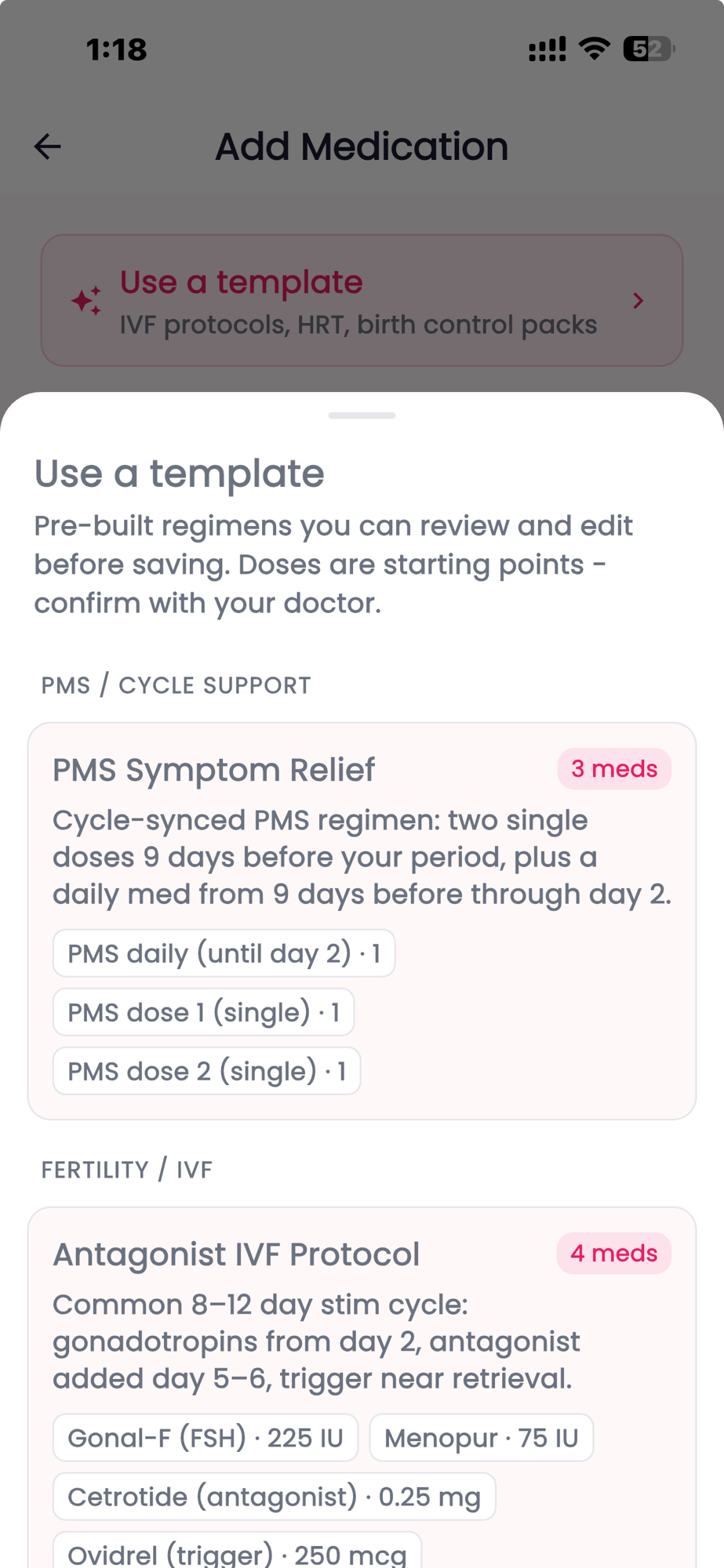
Missing or mistiming a dose in a treatment cycle is costly, which is exactly why anchoring reminders to your cycle - not the calendar - matters here. Femora ships ready-made fertility templates - like an antagonist IVF protocol with its full set of medications and doses - so you can set up a complex regimen in one step and adjust it with your clinic.
Cyclical HRT: a monthly pattern
In perimenopause, some HRT regimens are cyclical: estrogen through the month with a progestogen added for part of it to produce a regular bleed. That monthly structure is easy to lose track of, especially when life is busy.
How to keep the timing accurate
The hard part of all of this is not remembering to take a pill - it is that the right day changes every cycle. Fixed reminders drift; you end up doing mental math each month.
Femora's cycle-synced medication reminders handle that for you. You set the schedule relative to your period once - for example "from 9 days before my period until day 2" - and the app recalculates the dates from your prediction every cycle. You see your next dose or window in advance, mark doses taken, and log side effects so you and your clinician can see whether the timing is working.
A note on safety: this is general information, not medical advice. The right medication, dose, and timing are decisions for you and your prescriber - Femora helps you stick to the plan they give you, not replace it.
Download Femora to keep cycle-timed medication on track: https://femora.app/download/
Sources
- Premenstrual syndrome (PMS) - NHS.
- Menstrual migraine (migraine related to periods) - The Migraine Trust.
- Progesterone (for fertility / luteal support) - NHS.
- Hormone replacement therapy (HRT) - NHS.