Can a Wearable Predict Your Period? Smart Rings and AI in 2026
Smart rings and watches now market AI-powered cycle tracking, but they mostly confirm ovulation after it happens rather than predicting it in advance. They infer your cycle from skin or basal body temperature (which rises about 0.3 to 0.6°C after ovulation), resting heart rate, and HRV. The 2026 launches are real: Oura released a women's-health AI model on February 24, 2026, with ovulation-detection accuracy above 96%, and Natural Cycles is an FDA-cleared contraceptive app (about 98% effective with perfect use, 93% typical). But period forecasts still come from your logged cycle history, not the sensor, so you don't need hardware to predict your period. For conception, pair a wearable's temperature confirmation with a forward-looking signal like an LH ovulation predictor kit or cervical-fluid tracking. Wearables struggle with illness, alcohol, poor sleep, and irregular cycles like PCOS/PMOS.
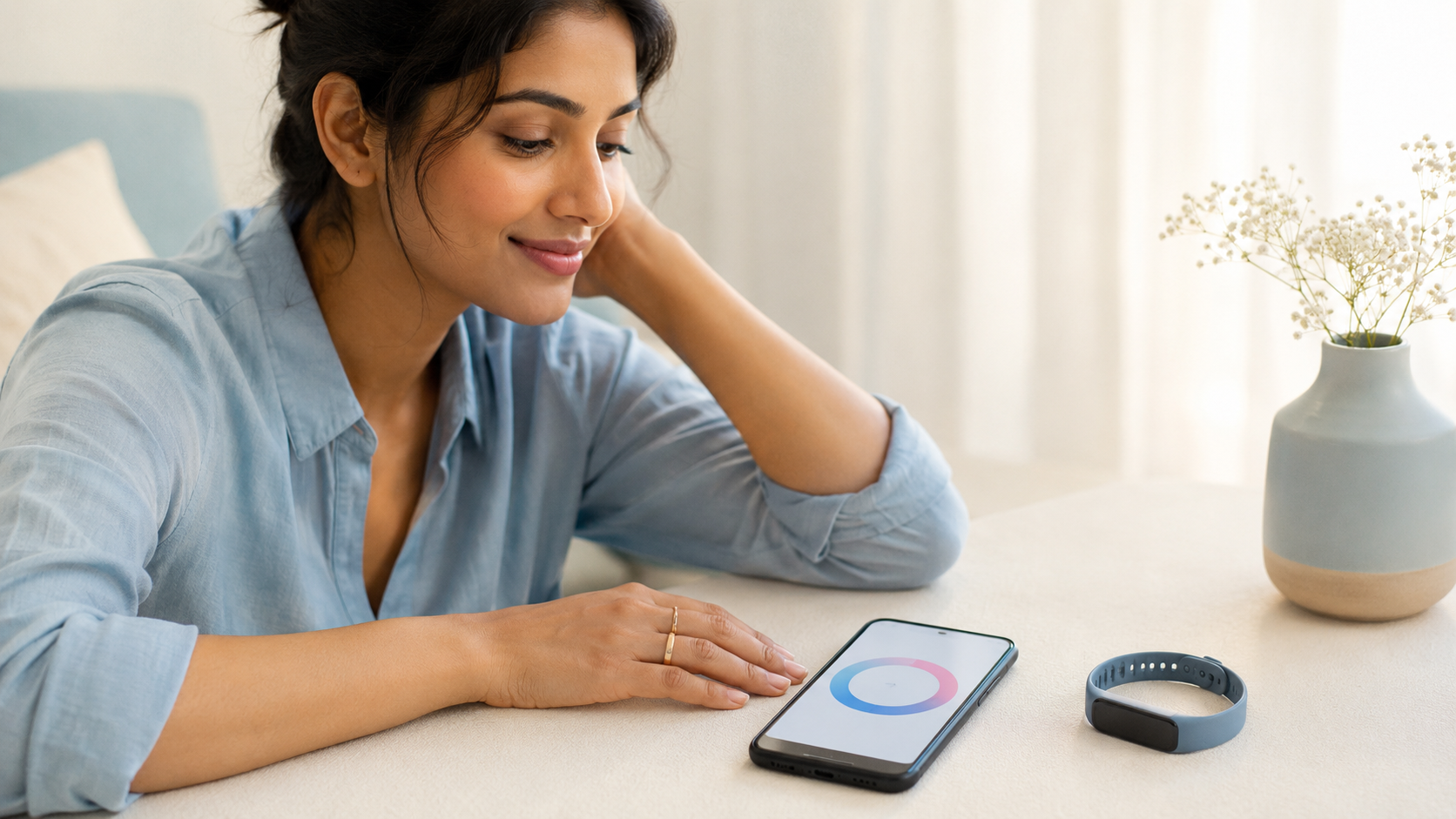
2026 has been the year femtech went from apps to hardware. Smart rings, watches, and at-home tests now promise to read your cycle from your body's own signals, and the marketing language has shifted from "track your period" to "predict it with AI."
On February 24, 2026, Oura launched its first proprietary AI model built specifically for women's health, covering menstrual cycles, fertility, pregnancy, and menopause. Apple Watch already offers retrospective ovulation estimates from wrist temperature, and FDA-cleared apps like Natural Cycles turn a daily temperature into a contraceptive method.
It's genuinely useful technology. But the headline promise hides an important distinction: most wearables confirm ovulation after it happens, they don't predict it in advance. Understanding that difference is the key to using these tools well, and to knowing what they can't do.
This guide explains what a wearable actually measures, what the 2026 launches changed, and how to combine a device with good logging for the most accurate read of your cycle.
What "wearable cycle tracking" actually means
A wearable doesn't see your hormones directly. It infers your cycle from physiological signals it can measure continuously:
- Skin or basal body temperature - your resting temperature rises by about 0.3 to 0.6°C after ovulation, driven by progesterone
- Resting heart rate and heart rate variability (HRV), which shift across cycle phases
- Respiratory rate and sleep patterns
An algorithm reads those signals and estimates where you are in your cycle. The temperature rise is the strongest single clue, because it is a reliable marker that ovulation has already occurred.
That is the crucial point. A temperature shift tells you ovulation happened, usually a day or two after the fact. It is excellent confirmation and terrible prediction, because by the time your temperature climbs, your most fertile days have already passed.
The question everyone is actually asking
"Can my ring predict my period?" has two different answers depending on what you mean.
Predicting your next period? Yes, reasonably well, but not because of the sensor. Period predictions come from your logged cycle history run through an algorithm, which is the same math a free app uses. The wearable mostly improves the ovulation timestamp that feeds the model.
Predicting ovulation before it happens? Not from temperature alone. For advance warning of your fertile window you need a signal that rises before ovulation, like the LH surge that ovulation predictor kits detect, or the change in cervical fluid. Our guide to ovulation symptoms covers those forward-looking signs.
So a wearable is best understood as an automatic, hands-off way to confirm ovulation and learn your pattern, layered on top of the cycle history you log.
What changed in 2026
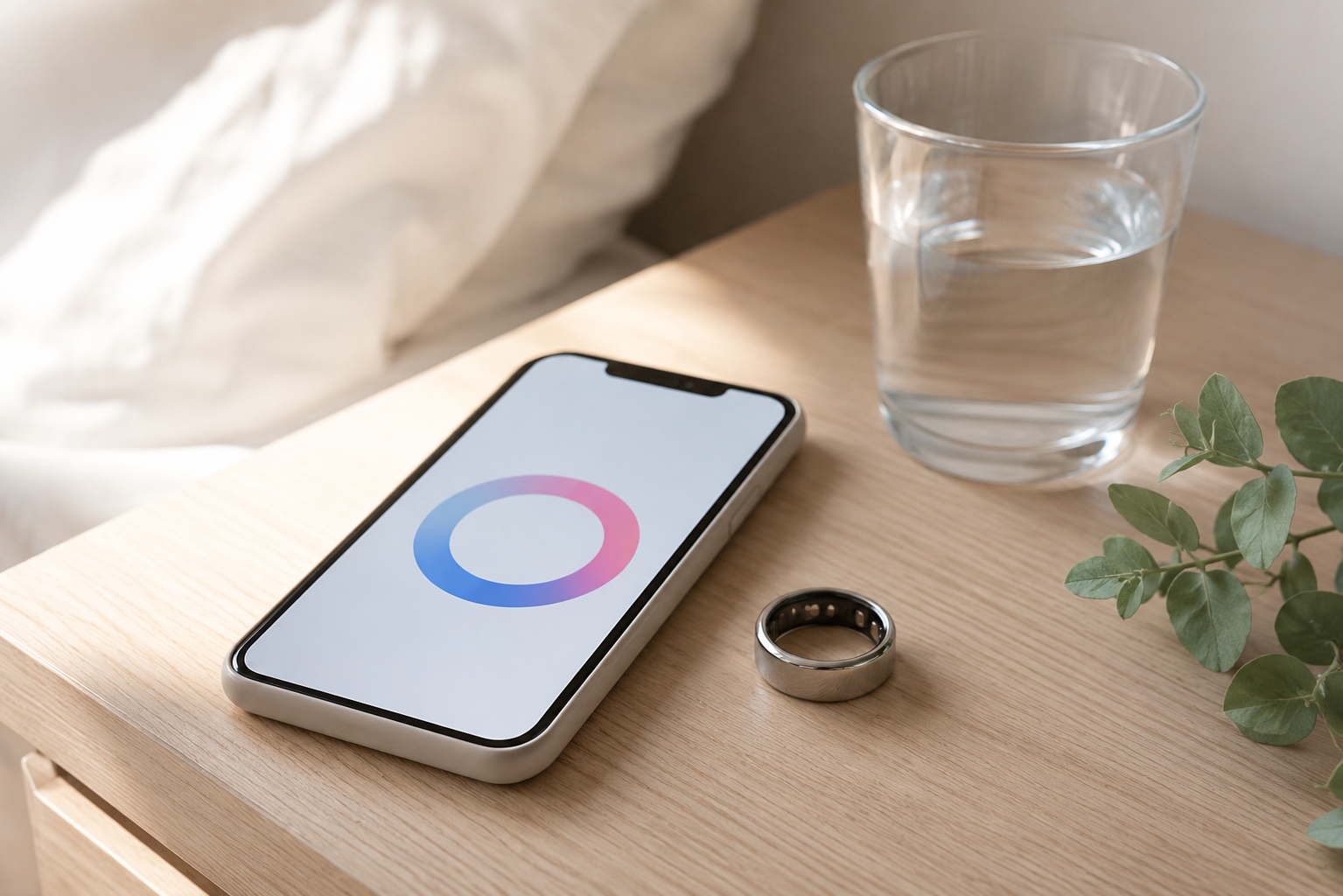
Smart rings and on-device AI
The headline launch was Oura's women's-health AI model on February 24, 2026, integrated into its in-app assistant and built with input from board-certified women's health specialists. It builds on the company's Cycle Insights feature, which published ovulation-detection accuracy above 96% in peer-reviewed research, and which was extended in November 2025 to give 12-month predictions. Notably, Oura says conversations run on its own servers and aren't used to train outside models.
The accuracy figure is real and impressive, but read it carefully: it measures how well the device detects ovulation from temperature, which is retrospective confirmation, not a forecast.
FDA-cleared birth control from temperature
Natural Cycles remains the clearest example of a wearable-adjacent tool earning regulatory clearance. As an FDA-cleared contraceptive app it is about 98% effective with perfect use and 93% with typical use, and it can take its daily temperature from a wearable instead of a thermometer. It works precisely because temperature reliably marks the post-ovulation phase.
At-home hormone testing
Alongside wearables, at-home hormone tests matured in 2026. Ovulation predictor kits measure the LH surge, while newer kits estimate AMH (anti-Mullerian hormone) as a rough marker of ovarian reserve. These add a hormone signal that temperature-based wearables can't see, which is why they complement rather than replace a ring or watch. For what each one actually tells you, see our guide to at-home hormone tests.
What this means for you
The practical translation is simple.
If you want to know your period is coming, a wearable or a well-kept app both work, because both rely on your logged history. You don't need to spend on hardware to get a solid period prediction.
If you're trying to conceive, the temperature shift confirms you ovulated but arrives too late to time intercourse. Pair the device with an ovulation predictor kit or cervical-fluid tracking for advance warning, and use the Fertile Window Calculator and Ovulation Calculator to plan around it.
If you're avoiding pregnancy, only use a tool cleared for that purpose, and follow its rules exactly. A general wellness ring is not a contraceptive.
What each tool can and can't tell you
A quick honest breakdown by category.
Temperature wearables (smart rings, some watches)
- Good at: confirming ovulation happened, learning your cycle pattern over months, effortless daily data
- Weak at: predicting ovulation in advance, working through illness, alcohol, poor sleep, or shift work that skews temperature
- Struggles with: irregular cycles and PCOS/PMOS, where ovulation timing is erratic
FDA-cleared contraceptive apps
- Good at: structured fertility-awareness contraception with clear rules
- Weak at: forgiving inconsistent measurement; effectiveness drops with typical use
Ovulation predictor kits (LH)
- Good at: advance warning, detecting the surge 24 to 36 hours before ovulation
- Weak at: confirming ovulation actually followed the surge, and reliability in PCOS where LH can run high
At-home AMH / hormone kits
- Good at: a rough snapshot of ovarian reserve or a hormone level
- Weak at: predicting day-to-day fertility; a single number is a snapshot, not a cycle map
What to do
- Decide what you actually need. Period prediction, conception timing, or contraception are three different jobs, and the right tool differs for each.
- Don't pay for hardware to get a period forecast. Log a few cycles first. The Menstrual Cycle Calculator gives you a baseline prediction for free.
- For conception, add a forward-looking signal. A wearable's temperature confirms ovulation; an LH kit or cervical-fluid tracking predicts it. Use both.
- Log alongside any device. Wearable data is most useful when it sits next to your symptoms, flow, and dates in one place, so patterns and red flags actually surface.
- Treat one number with caution. An at-home hormone result or a single odd temperature is a data point, not a diagnosis. Bring trends, not screenshots, to a clinician.
How Femora helps
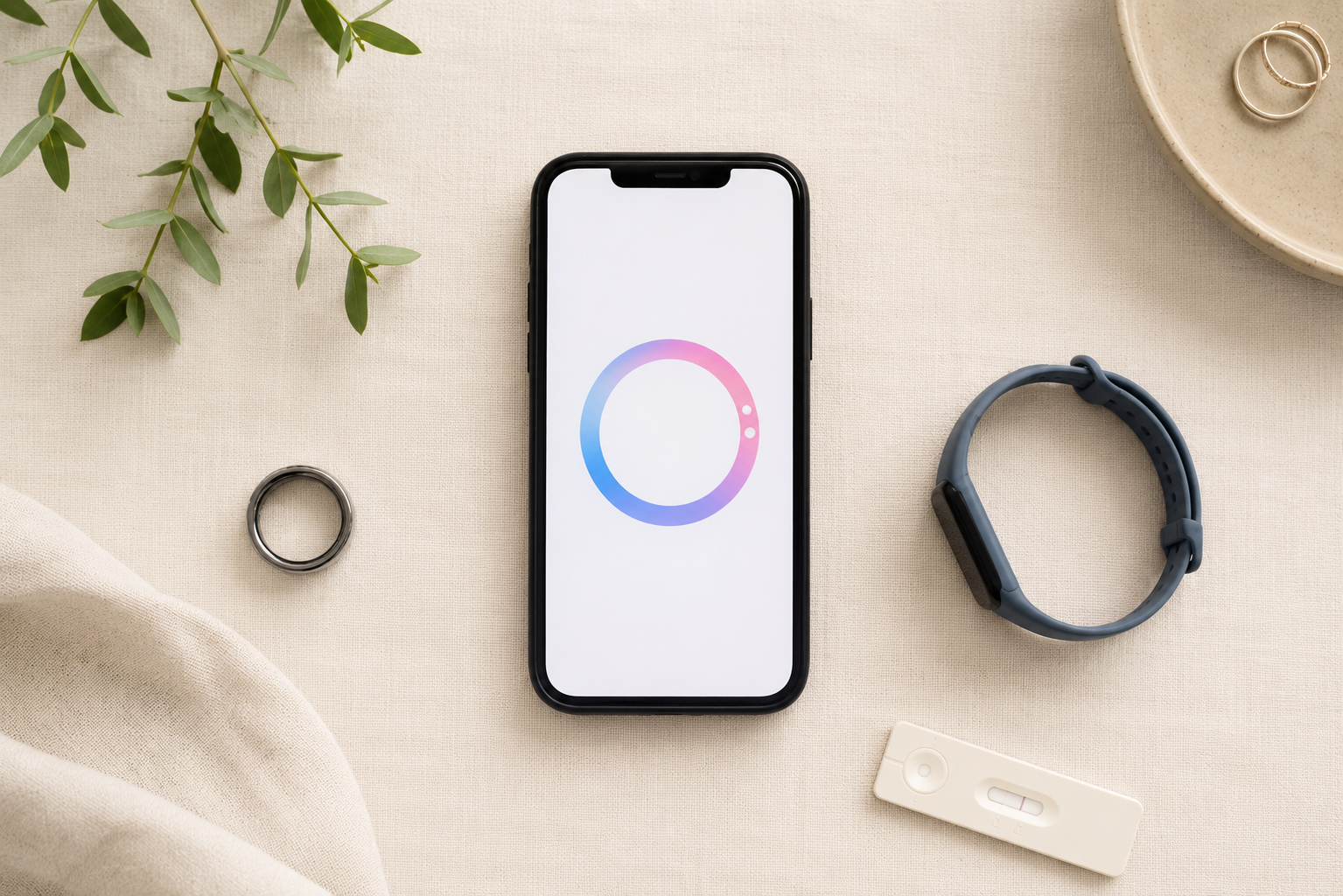
Wearables produce signals; they don't replace the record of your own cycle. Femora is the free hub that ties it together.
- Cycle and period logging - the history every prediction (yours, a ring's, or a watch's) actually runs on
- Fertile window and ovulation predictions - calculated from your logged cycles, sharpening month over month
- Symptom and sign tracking - cervical fluid, LH-kit results, mid-cycle pain, mood, and flow in one place, including the forward-looking signs a temperature wearable can't see
- Exportable history - trends to hand a clinician, which matter more than any single device reading
Pair the app with the Ovulation Calculator, Fertile Window Calculator, and Menstrual Cycle Calculator for quick estimates, and treat any wearable as one more signal feeding the same picture. For the bigger case on why this data matters, see your cycle as a vital sign.
The bigger picture
The 2026 wave of smart rings and AI models is real progress, and the accuracy numbers are earned. But the marketing word "predict" papers over a real limit: a body-temperature sensor confirms ovulation after it happens, it can't forecast it, and even the best device leans on the cycle history you record. Used as a layer on top of consistent logging, a wearable is a genuine upgrade. Used as a magic predictor, it will disappoint. Know the difference and you get the benefit without the false confidence.
Track your cycle and tie in any wearable's signals with Femora. Free on iOS and Android.
Sources
- Oura launches proprietary AI model purpose-built for women's health - Oura / The Momentum, 2026-02-24.
- Performance of a wearable for menstrual cycle and ovulation tracking - Journal of Medical Internet Research (JMIR).
- How effective is Natural Cycles as birth control? - Natural Cycles (FDA-cleared), 2024.
- Basal body temperature for natural family planning - Mayo Clinic, 2023.
- Periods and fertility in the menstrual cycle - NHS, 2023.